Travel Guide
Japan Castle Guide 2025–2026
Top historic castles — visiting tips, hours, prices, and itineraries
Japan's castles (shiro, 城) are among the country's most iconic landmarks. Built between the 12th and 17th centuries for military defence and political power, these multi-tiered towers (tenshu) and their surrounding moats and walls have survived wars, earthquakes, and time itself — at least 12 of the original wooden structures remain.
This guide covers Japan's top 9 castles: what makes each unique, how to visit, what to budget, and how to combine castle visits with the best nearby experiences.
Japan Castles in Photos


Quick Reference: Japan's Top Castles
| Castle | City | Admission | Original? |
|---|---|---|---|
| Himeji | Himeji | ¥1,000 | ✅ UNESCO |
| Matsumoto | Matsumoto | ¥700 | ✅ National Treasure |
| Hikone | Hikone | ¥800 | ✅ National Treasure |
| Nijo | Kyoto | ¥1,300 | ✅ UNESCO (Palace) |
| Kanazawa | Kanazawa | Free | Partially restored |
| Osaka | Osaka | ¥1,200 | ❌ 1931 reconstruction |
| Hiroshima | Hiroshima | ¥370 | ❌ 1958 reconstruction |
| Kumamoto | Kumamoto | ¥800 | ❌ Restored post-2016 |
| Nagoya | Nagoya | ¥500 | ❌ 1959 reconstruction |
Castle-by-Castle Guide
Himeji Castle
Himeji, Hyogo · "White Heron Castle"
Japan's finest surviving example of feudal Japanese castle architecture. Six stories, original structure largely intact. The most visited and photographed castle in Japan. Cherry blossoms in the park (April) are spectacular.
Matsumoto Castle
Matsumoto, Nagano · "Crow Castle" (black walls)
The oldest surviving castle in Japan (1590s) and one of the most beautiful, reflected in its surrounding moat. Its striking black-and-white exterior contrasts with the Japan Alps backdrop. Steep interior stairs are original.
Osaka Castle
Osaka · "Symbol of the Nation's Unification"
Originally built by Toyotomi Hideyoshi in 1583, the current tower is a 1931 reconstruction. Interior is a museum. The real highlight is the enormous park — cherry blossoms draw massive crowds in spring, autumn leaves in November.
Kumamoto Castle
Kumamoto, Kyushu · "Gingko Castle"
One of Japan's three premier castles. Heavily damaged in the 2016 earthquake, the main keep re-opened in 2021 after major restoration. The rebuilding story is part of the experience — exhibits document the restoration process.
Nijo Castle
Kyoto · "Palace of the Shogun"
The Kyoto palace of the Tokugawa shoguns. Famous for its "nightingale floors" (uguisubari) that squeak when walked upon to detect intruders. The painted interiors of Ninomaru Palace are exceptional.
Hiroshima Castle
Hiroshima · "Carp Castle"
Destroyed by the 1945 atomic bomb and rebuilt in 1958. The museum inside contextualises the castle's history from feudal times through WWII. Excellent views from the top floor. Combine with Peace Memorial Park (15 min walk).
Kanazawa Castle
Kanazawa, Ishikawa · "Milky White Castle"
Elegantly rebuilt structures with distinctive white lead tiles. Adjacent to the celebrated Kenroku-en Garden (one of Japan's top 3 gardens). Together they make Kanazawa one of Japan's most underrated destinations.
Nagoya Castle
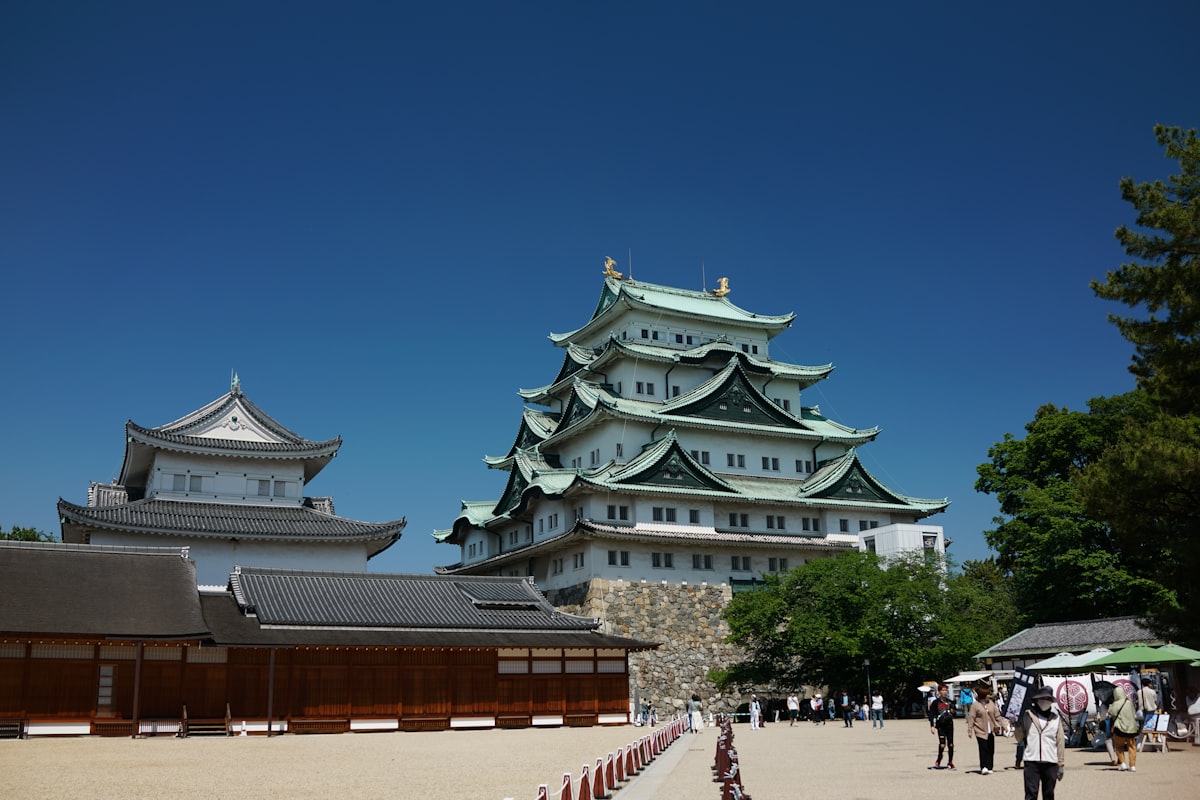
Nagoya · "Castle of Gold Dolphins"
Famous for the golden shachi (dolphin-like figures) on its roof. The original main keep was destroyed in WWII; the current one (1959) houses a museum. The adjacent Honmaru Palace is an authentic reconstruction in progress.
Hikone Castle
Hikone, Shiga · "Castle of Battles"
One of only five castles with an original main keep. Smaller than Himeji but extremely well-preserved. The hilltop location and Genkyu-en garden (with koi ponds) make for a full afternoon. Cherry blossoms are excellent.
Book Guided Castle Tours
A guided tour adds historical context that's easy to miss on a self-guided visit. Expert guides explain the defensive design, feudal history, and stories behind each castle.
Stay Near Japan's Castles
Staying in the city centre puts you within walking distance of the castle at dawn — before the tour groups arrive. Book early for Himeji (limited hotels) and Matsumoto (popular in foliage season).
Castle Itineraries
Frequently Asked Questions
How many original castles survive in Japan?+
Only 12 of Japan's original wooden castles survive — known as the "12 remaining original castles" (現存12天守). The most famous are Himeji (#1), Matsumoto, Hikone, Inuyama, and Kochi. Most other castles are modern concrete reconstructions.
What is the most impressive castle in Japan?+
Himeji Castle is widely considered the finest, most impressive, and best-preserved castle in Japan. It is a UNESCO World Heritage site and National Treasure. Matsumoto Castle is a close second for atmosphere and authenticity.
Can I visit multiple castles in one trip?+
Easily. A classic Kansai route covers Osaka Castle, Nijo Castle (Kyoto), and Himeji Castle in 2–3 days by Shinkansen and local train. A Chubu route covers Nagoya, Matsumoto, and Inuyama. The 7-day "castle hopper" is a popular travel niche.
Are Japan castles worth visiting even if they are reconstructions?+
Yes — the grounds, moats, and stone foundations of most castles are authentic even when the main keep is not. The museum content inside reconstructed towers is often excellent. The park and cherry blossom setting (spring) is a major draw regardless of authenticity.
What is the best season to visit Japan's castles?+
Spring (late March–April) for cherry blossoms framing the castle walls — a classic Japan photograph. Autumn (November) for red maple foliage. Summer evenings sometimes feature illumination events. Castles are open year-round and beautiful in snow too.
How long does it take to visit a castle?+
Plan 1–2 hours for the main keep and inner grounds, 2–3 hours if you include the surrounding park and garden. Himeji Castle requires the most time due to its size; Nijo Castle is often combined with nearby Kyoto temples in a half-day.
Ready to plan your Japan castle tour?
Use our AI planner to build a castle-focused Japan itinerary tailored to your travel dates and interests.
Plan My Japan Trip →Found this guide useful? Share it: