Watch: Sapporo in 60 Seconds
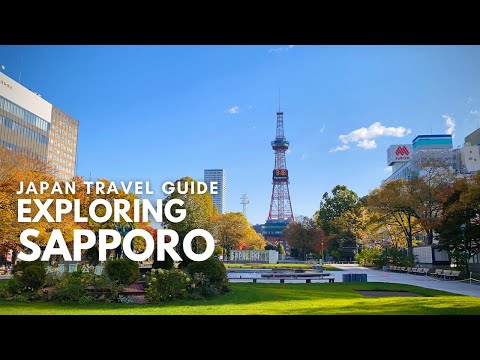
Explore Sapporo: Best Places to Visit — Official Video
Official promotional video — JNTO
Sapporo (札幌) — Hokkaido's capital and Japan's fifth-largest city — offers a dramatically different Japan experience than the Honshu mainland. Built on a grid plan by American advisors in 1869, it feels unusually spacious and orderly. Winters are extreme (-15 to -20°C) but magnificently beautiful; summers are Japan's most comfortable (22–26°C with almost no humidity). The food — miso ramen, jingisukan grilled lamb, snow crab, and Hokkaido dairy — is incomparable.
Sapporo is the gateway to Hokkaido's world-class ski resorts (Niseko, Furano, Rusutsu), the onsen town of Noboribetsu, the canal city of Otaru, and the lavender fields of Furano. It rewards travelers who are willing to venture beyond Honshu's Golden Route.
Top Attractions in Sapporo
Sapporo Snow Festival (Yuki Matsuri)
札幌雪まつりOne of Japan's most spectacular festivals and the world's largest snow sculpture event — held for 7 days in early February. Over 2 million visitors see 200+ massive snow and ice sculptures displayed across three sites: Odori Park (giant sculptures up to 25m tall; the main venue), Susukino (ice sculptures illuminated at night), and Tsu Dome (family venue with ice slides and snow activities). Sculptures take months to plan and weeks to build — some are as complex as full-scale castle replicas or international landmarks.
Highlights
- ▸200+ snow sculptures including life-size replicas of famous world landmarks
- ▸Susukino ice sculpture competition illuminated in neon at night
- ▸Odori Park main venue lined with illuminated sculptures from 1km of park
- ▸Food stalls selling Hokkaido specialties (corn, soup curry, crab) in the cold
The largest sculptures in Odori Park's main stage area are as tall as a three-story building — the scale is genuinely surprising on first visit. At -10°C or below on winter evenings, vendors sell steaming soup curry and crab legs from stalls along the park. The Susukino site (ice sculptures) is a 10-minute walk from Odori — most tour groups skip it, leaving it significantly less crowded even during peak festival days.
Odori Park
大通公園A 1.5km green boulevard cutting through the center of Sapporo, lined with elm trees, flower beds, and fountains. In winter it becomes the Snow Festival main venue; in summer it hosts beer gardens (July–August) where Hokkaido beer companies set up massive outdoor seating; in autumn the ginkgo trees turn gold. The TV Tower at its eastern end (viewing deck: ¥740) overlooks the entire park.
Highlights
- ▸Summer beer garden (July–August) — Kirin, Asahi, Sapporo, and Suntory set up outdoor seats
- ▸Snow Festival venue (early February) — free to walk through
- ▸Sapporo TV Tower (90m) observation deck with city grid views
- ▸Lilac Festival (late May) when the park's 400 lilac trees bloom
The park is primarily a 1.5 km linear walking route from the TV Tower west to the end of the park. In beer garden season (July–August), tables from four major beer brands fill each city block with distinct menus and energy — Sapporo Brewery's block has the most local character. The TV Tower observation deck (90 m) reveals Sapporo's unusually orderly grid layout, a legacy of the American-influenced Meiji-era city planning.
Sapporo Beer Museum
サッポロビール博物館Japan's only beer museum, housed in the original Sapporo Brewery building (1890) — a red brick Victorian-era factory that is one of Sapporo's most beautiful buildings. The museum covers 140+ years of Hokkaido beer history (free self-guided tour) or guided tour (¥500). The adjoining Sapporo Beer Garden restaurant serves Hokkaido jingisukan (Genghis Khan grilled lamb) and all-you-can-drink Sapporo beer sets.
Highlights
- ▸Historic 1890 red brick brewery building — most beautiful building in Sapporo
- ▸Free self-guided museum covering Hokkaido beer history with original equipment
- ▸Star Hall: sample room with Sapporo Classic draft beer (Hokkaido-only limited version, ¥500/glass)
- ▸Jingisukan all-you-can-eat+drink sets at Beer Garden restaurant (¥4,200/90min)
The 1890 red brick building is one of Sapporo's most architecturally impressive structures — the interior retains original brewing equipment displayed in a cavernous, warmly lit hall. The Star Hall tasting room serves Sapporo Classic on tap; the Hokkaido-only draft version tastes measurably richer and fuller than mainland versions. The Beer Garden restaurant side becomes loud at peak times — expect lively all-you-can-eat-and-drink energy.
Susukino (Night District)
すすきのJapan's largest entertainment district north of Tokyo — a sprawling neighborhood of izakaya bars, ramen shops, karaoke halls, and live music venues. Susukino's main intersection (famous for its giant red neon sign) is the symbolic heart of Hokkaido nightlife. During the Snow Festival, it hosts an ice sculpture competition. The entire district comes alive after 6 PM and runs until the early hours.
Highlights
- ▸Neon intersection sign — Susukino's iconic photo spot at night
- ▸Ramen Alley (Ganso Ramen Yokocho) — 17 tiny ramen stalls in a narrow covered alley since 1951
- ▸Ice sculpture competition during Snow Festival (early February)
- ▸Jazz bars and live music venues in the side streets (Hokkaido has a strong jazz culture)
Ganso Ramen Alley (Ramen Yokocho) is a lantern-lit corridor barely wide enough for two people to pass — 17 tiny stalls with curtained entrances, each seating 8–10 at a steam-filled counter. The main Susukino intersection glows with a large neon sign visible from blocks away. Popular ramen stalls fill up quickly after 7 PM; arriving by 6:30 PM secures a seat without waiting. The district runs late — until 2 AM or beyond on weekends.
Hokkaido University Ginkgo Avenue
北海道大学イチョウ並木One of Japan's most beautiful university campuses — Hokkaido University's main campus is a 177-hectare park open to the public year-round. The 380-meter central ginkgo tree avenue turns brilliant gold in mid-October, creating a tunnel of yellow that's among Japan's most photographed autumn sights. In summer, the campus botanical garden (Shokubutsuen) blooms with lilacs and roses. The university model farm's silo buildings are distinctly un-Japanese (inspired by American agricultural design).
Highlights
- ▸Ginkgo avenue (late October–early November) — 70 trees turn brilliant yellow simultaneously
- ▸Roppongi-like open campus with Western-style brick buildings (unusual in Japan)
- ▸Hokkaido University Botanical Garden with 4,000+ plant species
- ▸Free access to entire campus — local students, deer statues, and open lawns
The 380-metre ginkgo avenue creates a yellow ceiling overhead during the third week of October — both trees and ground are carpeted in gold. The campus has an unusual open, spacious feeling shaped by American agricultural college planning, unlike the compact feel of most Japanese universities. Outside ginkgo season, the campus is a peaceful green escape that locals use daily for walking and cycling.
Jozankei Onsen
定山渓温泉Sapporo's nearest hot spring resort — 30km south of the city in a forested river valley, accessible by bus in 60 minutes. Jozankei has 55+ hot spring sources producing milky white, sodium-chloride-rich waters known for skin-softening effects. In autumn (September–October), the valley blazes red and gold; in winter, snow blankets the ryokan rooftops and outdoor baths (rotenburo) become magical. A perfect half-day or overnight escape from Sapporo.
Highlights
- ▸Outdoor rotenburo baths in mountain river valley — especially magical in snow season
- ▸Milky white spring water with high skin-softening mineral content
- ▸Autumn foliage (September–October) along the Toyohira River gorge
- ▸Kappa Buchi hot spring fountain — free public foot bath in town center
The town is a cluster of ryokan along the Toyohira River gorge — more intimate than Hokkaido's largest onsen resort (Noboribetsu). Outdoor rotenburo overlook the forested river valley; in winter the contrast of snow-covered banks and steaming water is visceral. The free public foot bath (ashiyu) at Kappa Buchi near the town center lets you test the mineral-rich water without paying for full bathing.
Moerenuma Park
モエレ沼公園A masterpiece of landscape art — a 189-hectare park entirely designed by Japanese-American sculptor Isamu Noguchi (1904–1988) as his final and most ambitious work. The park features the Glass Pyramid (Hidamari) as a community center, Mount Moere (62m artificial hill with 360° views), Sakura no Mori (cherry tree forest), and a seawater fountain (July–August). Every element of the park — paths, hills, fountain shapes — was designed as sculpture.
Highlights
- ▸Glass Pyramid (Hidamari) — Noguchi's crystalline cultural center
- ▸Mount Moere artificial hill with panoramic views of Sapporo and surrounding plains
- ▸Seawater fountain show (July–August) — Japan's largest fountain reaches 25m height
- ▸Cherry blossom season in Sakura no Mori forest (late April–early May)
At 189 hectares, the park takes 30+ minutes just to walk from one end to the other — a bicycle rental (¥300/day near the main entrance) is worthwhile. Every path, hill contour, and even bench placement is part of Noguchi's sculptural vision. The Glass Pyramid interior houses a café and light-filled gallery. On clear days, the view from Mount Moere's summit (62 m) extends to volcanic mountains and, on the best days, the Pacific Ocean.
Shiroi Koibito Park
白い恋人パークA whimsical chocolate factory and theme park built by Ishiya Confectionery — maker of Shiroi Koibito ("White Lover"), Japan's most famous souvenir cookie (crispy langue-de-chat sandwiching white chocolate). The mock-English-village complex has a museum of chocolate history, live cookie production viewing, a rose garden, a cookery school, and a retro carousel. More charming than it sounds, and the cookies really are excellent.
Highlights
- ▸Live production viewing of Shiroi Koibito cookies on the factory tour
- ▸Customized Shiroi Koibito boxes with your name printed (¥1,500–2,000)
- ▸English-style garden with 2,500 roses in bloom (June–October)
- ▸Café serving Hokkaido milk soft cream, chocolate fondue, and cookie-themed drinks
The mock-English-village complex is more charming than photos suggest — particularly the rose garden and Victorian clock tower. Factory viewing windows let you watch langue-de-chat biscuits being assembled at speed on conveyor belts. The park café serves standout Hokkaido milk soft serve. The factory outlet section inside stocks discontinued seasonal varieties not sold anywhere else, and the on-site personalised tin printing takes under 15 minutes.
Sapporo & Hokkaido Food Guide
Miso Ramen (Sapporo Style)
Sapporo is the birthplace of miso ramen — the rich, hearty style with thick wavy noodles in a deeply savory miso-based pork broth, topped with corn, butter, bamboo shoots, and bean sprouts. The soup is famously rich and warming — essential in a city where -20°C winters are common. Sapporo miso ramen is significantly different from Tokyo soy sauce or Fukuoka tonkotsu ramen; thicker, creamier, and more substantial.
Where: Ramen Yokocho (18 shops in Susukino alley), Sumire (Sapporo Station area) — widely considered the best, Menya Saimi.
Price: ¥900–1,400 per bowl
Jingisukan (Genghis Khan Grilled Lamb)
Hokkaido's beloved grilled lamb dish — thinly sliced lamb and vegetables cooked on a dome-shaped iron grill (shaped to resemble Genghis Khan's helmet in folklore). The sweet miso-based dipping sauce is essential. Hokkaido raises 60% of Japan's sheep — the lamb is fresh and mild, nothing like the gamey perception some travelers have. An unmissable Hokkaido experience.
Where: Sapporo Beer Garden (all-you-can-eat+drink format), Daruma (Susukino, since 1952 — most famous), Matsuo Jingisukan (multiple locations).
Price: ¥1,500–2,500 à la carte; ¥4,200/90min all-you-can-eat+drink at Beer Garden
Hokkaido Crab (Kani)
Hokkaido's cold waters produce Japan's finest crab: king crab (taraba-gani), snow crab (zuwai-gani), and the prized hairy crab (ke-gani, unique to Hokkaido). Sapporo's Kani Honke is Japan's most famous crab restaurant chain. The best crab in fresh form is found at Nijo Market (2nd market), a traditional fish market 3 min from Sapporo Station.
Where: Nijo Market (Sapporo's daily fish market, 7:00–18:00) for fresh crab, Kani Honke (splurge restaurant), Sapporo Central Wholesale Market (near the brewery) for wholesale prices.
Price: Nijo Market: ¥2,000–8,000 per crab leg; Kani Honke: ¥8,000–20,000 per course
Soup Curry
A uniquely Sapporo invention — a thin, spiced broth (not the thick Indian curry sauce) filled with large pieces of vegetables and meat. The liquid curry is drunk like soup; diners choose their spice level (1–10+ scale) and the protein. The dish evolved in Sapporo's counter-culture café scene in the 1970s and spread nationwide as a Hokkaido specialty.
Where: Rojiura Curry Samurai (multiple Sapporo locations — line up before opening), Magic Spice (Sapporo — the original), Suage+ (JR Tower shopping complex).
Price: ¥1,100–1,800 per bowl
Hokkaido Soft Serve Ice Cream
Hokkaido dairy is Japan's finest — richer in fat content and more flavorful than mainland milk due to Hokkaido's cold climate and extensive grassland farming. Every convenience store, souvenir shop, and café in Sapporo serves Hokkaido milk soft serve (soft cream), and the flavor difference from mainland ice cream is immediately noticeable. The corn soft serve (hokkaido corn + milk swirl) is particularly regional.
Where: Available at virtually every convenience store, Nijo Market, JR Tower, and dedicated soft serve shops. Shimizu Farm (near Odori) has exceptional seasonal flavors.
Price: ¥350–600
Sapporo Beer
The oldest beer brand in Japan (founded 1876 in Sapporo) — and Sapporo Classic, available only in Hokkaido, is the best version. The cold climate and pristine water make Sapporo beer particularly crisp. The Sapporo Beer Garden serves Sapporo Classic draft alongside Kirin and other brands in a huge outdoor/indoor beer hall complex. Summer (July–August) brings Odori Park beer gardens sponsored by competing brands.
Where: Sapporo Beer Museum and Beer Garden (original brewery complex), any izakaya or convenience store for Sapporo Classic cans (sold only in Hokkaido).
Price: ¥500–700/glass at restaurants; ¥200–250 at convenience stores
Where to Stay in Sapporo
Sapporo has excellent value hotels. The Odori/Susukino area is ideal for exploring on foot; Sapporo Station is best for early-morning departures.
Hotels in Odori / City Center
Best location for Snow Festival, beer gardens, Hokkaido University, and subway access
Tours & Activities in Sapporo
Ramen making classes, Snow Festival tours, Jozankei onsen day trips, Otaru glass craft tours, and Niseko skiing packages.
Getting to Sapporo
From Tokyo
1h 30min (flight) / currently 4h 5min (Shinkansen to Shin-Hakodate-Hokuto then transfer)Method: Flight (standard) or Shinkansen (Hokkaido Shinkansen, extended in 2030)
Cost: ¥15,000–35,000 (flight, varies) / ¥22,690 (Shinkansen to Shin-Hakodate + limited express)
Flying is the practical choice — ANA and JAL offer heavy competition on the Tokyo-Sapporo (Haneda-Chitose) route. Book 30–60 days ahead for ¥15,000–20,000 round trip. The Shinkansen extension to Sapporo is under construction (expected 2030) — currently requires a transfer at Shin-Hakodate-Hokuto making it a 5+ hour journey not practical for most visitors.
From Osaka
1h 45minMethod: Flight
Cost: ¥12,000–28,000
Peach Aviation and Jetstar offer low-cost Osaka (Kansai KIX) to Sapporo (Chitose CTS) flights; book 2–3 months ahead for the best prices. LCC flights may have restricted baggage — budget ¥1,000–3,000 extra for checked bags.
From New Chitose Airport (arrival)
37 min to Sapporo StationMethod: JR Airport Express (快速エアポート)
Cost: ¥1,150 one-way (¥2,300 return)
The Rapid Airport train runs every 15 minutes between 6:00 and midnight. Buy an ICOCA or Suica card (works on Hokkaido JR) for seamless travel. If staying near Odori Park, the subway from Sapporo Station is faster than a taxi in traffic.
From Hakodate
3h 30minMethod: JR Hokkaido Limited Express (Hokuto)
Cost: ¥8,910
Hakodate is Hokkaido's second most visited city (historic old town, morning market). The Hokuto limited express is scenic through Hokkaido's interior. Hakodate is also reachable from Tokyo via Hokkaido Shinkansen to Shin-Hakodate-Hokuto (4h 5min) making a Hakodate→Sapporo loop sensible for JR Pass holders.
Sapporo FAQ
When is the best time to visit Sapporo?▼
How do I get around Sapporo?▼
Is Sapporo worth visiting without the Snow Festival?▼
What day trips can I do from Sapporo?▼
Is Sapporo expensive?▼
Do I need a JR Pass for Hokkaido?▼
Plan Your Sapporo Trip
Found this guide useful? Share it: