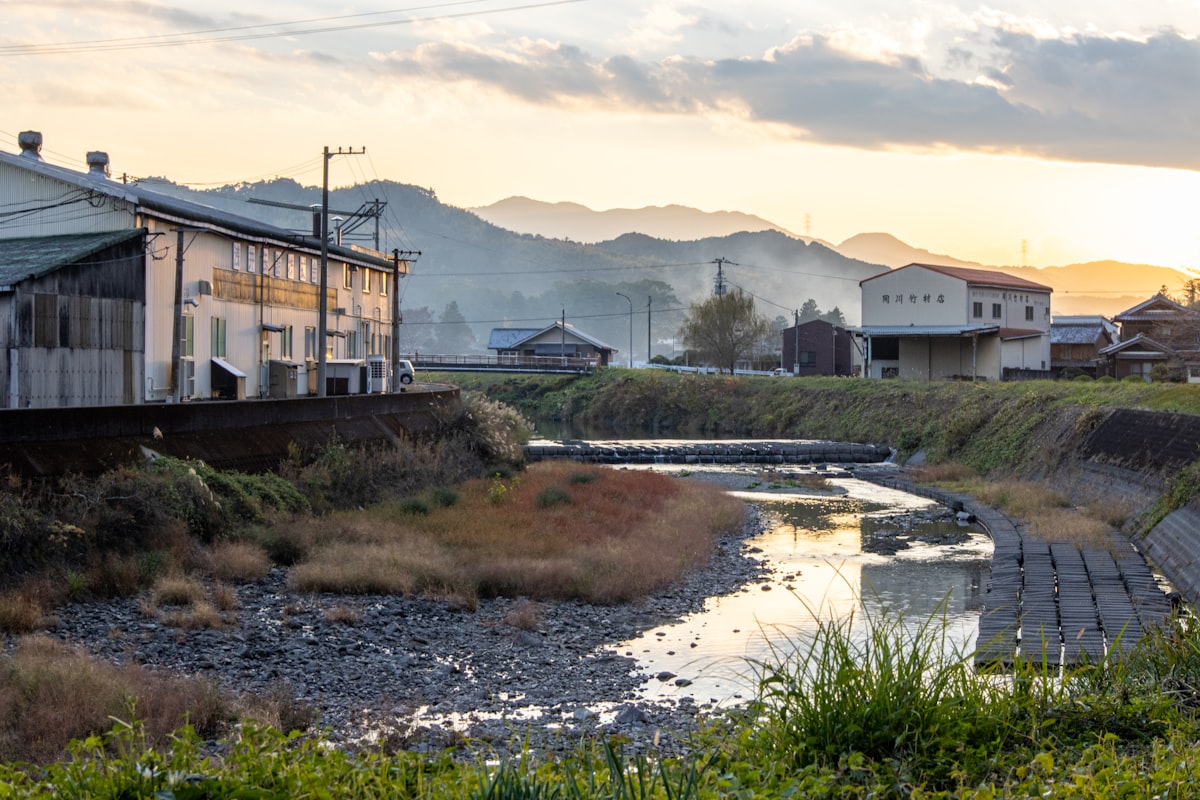
Iwate Travel Guide
Golden temples, wanko soba challenges & the wild Sanriku Coast
Iwate is Japan's second-largest prefecture by area and one of its most rewarding for travellers willing to venture beyond the golden triangle of Tokyo, Kyoto, and Osaka. The prefecture holds UNESCO-listed Hiraizumi, whose 11th-century golden Konjikido hall has dazzled visitors for 900 years, the Sanriku Coast's white-rock coves and sea-stack scenery at Jodogahama, and the extraordinary wanko sobaeating tradition — a bowl-by-bowl refill experience that turns lunch into sporting event. The prefectural capital Morioka is one of Japan's most liveable cities, famous for three distinct noodle dishes and a shinkansen connection that puts Tokyo just over two hours away.
Top Attractions in Iwate
Hiraizumi — UNESCO World Heritage Site
The 11th-century capital of the Northern Fujiwara clan, Hiraizumi rivals Kyoto's cultural grandeur. The crown jewel is Chusonji Temple's Konjikido — a compact golden hall completely sheathed in gold leaf, lacquerwork, and mother-of-pearl inlay, built in 1124 to enshrine the mummified remains of three Fujiwara lords. Adjacent Motsuji Temple features Japan's best-preserved Heian-period garden. Designated UNESCO World Heritage in 2011, the site reflects the Buddhist Pure Land philosophy that once made Hiraizumi the second-largest city in Japan.
💡 Take the Tohoku Shinkansen to Ichinoseki, then a local train one stop to Hiraizumi Station — the entire site is walkable or cyclable from the station.
Genbikei Gorge — Flying Dango Cable Car
A dramatic river gorge carved from volcanic rock where the Iwai River has sculpted bizarre formations over millennia. The unmissable experience is the hand-operated cable car (called kakko) that flies across the gorge delivering dango (rice-cake sweets) from the riverside shop to a wooden platform on the opposite cliff — you lower a basket with your money and haul back your dango. The gorge's tortoise-shaped Kamegaishi rock and the cascading waterfalls make this one of Japan's most photogenic hidden spots.
💡 Located 10 minutes by taxi from Ichinoseki Station. The dango shop operates 8:30–17:00; arrive early as stock sells out.
Ryusendo Cave — Japan's Largest Stalactite Cave
One of Japan's three great limestone caves, Ryusendo is famous for underground lakes of extraordinary clarity — the third lake reaches a depth of 98 metres with visibility to the bottom. Electric-blue bioluminescent water illuminated by careful lighting creates an otherworldly atmosphere deep inside the mountain. The cave maintains a constant 10°C year-round and extends at least 3.5km (with over 700m open to visitors). The adjacent Ryusendo-do Cave Museum displays fossils and cave exploration history.
💡 Located near Iwaizumi on the Sanriku Coast. Combine with a Jodogahama visit on the same day trip from Morioka — rent a car as public transport connections are infrequent.
Jodogahama — Pure Land Beach
Named "Pure Land Beach" by an 18th-century Buddhist monk who declared it as beautiful as paradise, Jodogahama is the Sanriku Coast's most spectacular spot. White rhyolite sea stacks and pillars rise from cobalt water, creating a surreal moonscape unlike any other Japanese beach. Glass-bottomed boat tours explore the sea stacks and sea caves where black-tailed gulls nest. The Sanriku Reconstruction National Park surrounds the area, connecting 200km of dramatic coastline shaped by the 2011 Great East Japan Earthquake and tsunami.
💡 Take the JR Sanriku Railway from Miyako Station to reach the coast. The beach is a 20-minute walk from Miyako Station or 5 minutes by bus.
Morioka Castle Ruins & City Stroll
Morioka's compact castle ruins (Kōjōshi Park) sit on granite outcrops in the city centre, with cherry blossoms in spring and autumn foliage in October-November. The city is famous for three noodles — wanko soba, jajamen, and reimen — all within walking distance of each other in the old merchant quarter. The Zaimoku-cho and Nakanohashi area preserves Meiji-era stone buildings including the Iwate Bank Red Brick Museum (1911, designed in the style of the Bank of Japan). Morioka is also the birthplace of Kenji Miyazawa, Japan's beloved children's author.
💡 Morioka makes an ideal base for Iwate — it's only 2 hours 10 minutes from Tokyo on the Hayabusa shinkansen. The city centre is best explored on foot.
Wanko Soba Challenge
Iwate's most famous culinary tradition: waitstaff refill your lacquer bowl with a single mouthful of thin buckwheat soba the moment you finish, calling "Hai, don-don!" (Come on, more!) in rapid succession. The challenge is to see how many bowls (each about 15g) you can eat — the average is 40–50, a full soba serving is around 15, and champions manage over 500. A lid on your bowl signals you're finished. Traditional restaurants like Azumaya and Chokurian in Morioka have served wanko soba for over 100 years, with certificates issued for those who reach 100 bowls.
💡 Book ahead at Azumaya (Honcho branch) or Chokurian — both require reservations for the formal wanko soba experience. Lunch service only.
What to Eat in Iwate
Wanko Soba
The bowl-by-bowl eating tradition that defines Iwate — thin buckwheat soba served in rapid refills in lacquer bowls, with a dozen toppings (natto, pickled plum, salmon roe, sesame, chrysanthemum flower) to vary each mouthful. The ritual is as much performance as meal.
📍 Azumaya, Chokurian (Morioka)
Morioka Jajamen
Thick udon-like wheat noodles served with a ladle of meat miso (ground pork with ginger and garlic), cucumber, and spring onion — tossed together at the table. When the noodles are finished, crack a raw egg into the remaining sauce and ask for "chita-jaja" (a cup of hot pasta water) to create an impromptu egg soup.
📍 Pairon Honten, Shintaro (Morioka)
Morioka Reimen (Cold Noodles)
Translucent chewy buckwheat-and-starch noodles in a clear beef broth, served ice-cold with kimchi, watermelon, a hard-boiled egg, and a slice of char siu pork. A legacy of Zainichi Korean culture in Morioka — originally brought from Pyongyang — the dish is especially refreshing in summer.
📍 Pyon Pyon Sha (multiple Morioka locations)
Iwate Wagyu
Iwate Prefecture's premium Shorthorn and Japanese Black cattle raised on clean mountain pastures, producing deeply marbled beef with a clean, sweet flavour. Served as sukiyaki, yakiniku, or teppanyaki — Morioka's Gozenshu restaurant is the local prestige destination.
📍 Gozenshu, Hitsujigaoka (Morioka)
Sanriku Seafood — Uni & Abalone
The cold, mineral-rich waters of the Sanriku Coast produce some of Japan's finest sea urchin (uni) and abalone (awabi). Miyako and Kamaishi ports serve seasonal kaiseki featuring same-day-caught uni rice bowls, salt-grilled abalone, and thick seafood chowder in summer months (June–September).
📍 Miyako port restaurants; Kamaishi seafood markets
Nanbu Senbei
Iwate's iconic rice cracker: a thin, round, slightly salty cracker made from wheat flour and sesame or peanuts, said to have been made in the region for 700 years. Available in sweet and savoury varieties, often used crushed in hot-pot (senbei-jiru) soups typical of neighbouring Aomori. Perfect edible souvenir — sold at every station and shopping street.
📍 Morioka Station, Fesanninoru shopping mall
Where to Stay in Iwate
Morioka City is the best base for exploring Iwate — excellent shinkansen connections, all three famous noodle restaurants within walking distance, and easy day-trip access to Hiraizumi, Genbikei, and the coast. Hiraizumi/Ichinoseki suits travellers focused on the UNESCO sites who want a quieter ryokan experience.
Hotels in Morioka City
Best base — shinkansen city centre, all noodle restaurants walkable
Hotels near Hiraizumi / Ichinoseki
UNESCO site access — traditional ryokan, quieter surroundings
Tours & Activities in Iwate
Book guided Hiraizumi walking tours, Sanriku boat tours, wanko soba experiences, and Jodogahama glass-bottom boat excursions.
Getting to Iwate
Iwate Travel FAQ
How many days should I spend in Iwate?▾
3–4 days covers Morioka city, a half-day trip to Hiraizumi, and a full day on the Sanriku Coast. Add a day if you want to visit Ryusendo Cave and Genbikei Gorge. Iwate is best combined with Sendai (1 hr south) or Aomori (1 hr north) on a Tohoku itinerary.
Is Iwate covered by the JR Pass?▾
Yes — the Tohoku Shinkansen (Morioka), JR Yamada Line (Miyako), and JR Kamaishi Line are all covered. The Sanriku Railway (private) is not covered but is inexpensive. A 5-day or 7-day JR Pass is good value if you're also visiting Sendai, Aomori, or Akita.
Do I need to book wanko soba in advance?▾
Yes, especially for the formal full-course experience at Azumaya or Chokurian. Book at least a week ahead for weekends. Walk-in soba is available at less famous shops, but the high-energy refill ritual is only at the specialist restaurants.
What is the best time to visit Iwate?▾
Late April–May for cherry blossoms (Morioka Castle, Kitakami Tenshochi with 10,000 trees). September is ideal for Sanriku Coast seafood and mild weather. January–February for winter festivals (Morioka Sansa Odori is in August). Avoid Golden Week (late April–early May) crowds at Hiraizumi.
Can I visit Hiraizumi as a day trip from Tokyo?▾
Yes — the Hayabusa shinkansen reaches Ichinoseki in 2 hrs 20 min, and Hiraizumi is 10 minutes further by local train. With an early start you have 4–5 hours on site before returning. Better to overnight in Morioka or Ichinoseki to allow more leisurely exploration.
Is Iwate suitable for first-time Japan visitors?▾
Iwate is ideal for Japan travellers who have already done Tokyo, Kyoto, and Osaka and want authentic, crowd-free culture. English signage exists at major sites (Hiraizumi, Jodogahama) but is limited in smaller towns. Download Google Translate and Google Maps offline before you go.