Japan Aquarium Guide 2026
From whale sharks at Kaiyukan to manta rays at Churaumi — Japan's most extraordinary underwater worlds
Plan Your Japan Aquarium Trip — Free →From whale sharks at Kaiyukan to manta rays at Churaumi — Japan's most extraordinary underwater worlds
Plan Your Japan Aquarium Trip — Free →Japan is home to some of the world's most extraordinary aquariums — not just in scale, but in design philosophy and animal care standards. From Kaiyukan's pioneering whale shark exhibition in Osaka (the first long-term whale shark husbandry program in the world) to Churaumi's breathtaking Kuroshio Sea tank in Okinawa, Japanese aquariums combine scientific rigor with theatrical presentation in a way that few countries have matched. Whether you're traveling with children or seeking a contemplative jellyfish gallery after dark, Japan's aquariums offer experiences impossible to replicate elsewhere.
One of the world's great aquariums, built around the "Pacific Ring of Fire" concept. The central Pacific tank (5.4 million liters, 9 meters deep) is home to whale sharks, the aquarium's most iconic residents since 1995. Spiral ramps guide visitors through 15 themed zones across 8 floors. Open daily 10 am – 8 pm (last entry 7 pm). Adults ¥2,700. Combine with Tempozan Ferris Wheel for full-day fun.
Set within Ocean Expo Park on Okinawa's west coast, Churaumi's Kuroshio Sea tank is the world's second-largest acrylic panel. Up to 3 whale sharks and 3 manta rays swim together — a sight found nowhere else. Outdoor dolphin shows, sea turtle lagoon, and manatee pool surround the main building. Adults ¥1,880. Allow 4–5 hours. Shuttle buses connect to Naha.
Tokyo's best-value aquarium at just ¥700 for adults. The dome-shaped main building on Tokyo Bay houses bluefin tuna in a circular open-ocean tank — one of the few places in the world where this species is exhibited at scale. Managed by the Tokyo Metropolitan Government. Minutes from Kasai Rinkai Koen station on the Keiyō Line.
Located on the 5th–6th floors of Tokyo Skytree Town, Sumida Aquarium is a compact, design-forward experience. The open jellyfish lab — where researchers work in full view of visitors — is unique in Japan. The large penguin and fur seal pools have floor-to-ceiling glass. Adults ¥2,400. Open daily 10 am – 9 pm. Can be combined with Tokyo Skytree Tower visit.
A theme park-aquarium hybrid on a man-made island in Yokohama Bay. Free park entry — pay only for attractions. The Aqua Museum aquarium (¥3,500) features walrus, beluga whales, and interactive dolphin shows in Japan's largest dolphin lagoon. Rollercoasters, a water ride, and illumination events run year-round. 35 minutes from Yokohama station by Seaside Line monorail.
The largest aquarium in the Kanto region outside Tokyo, housing 580 species including whale sharks. The shark exhibit (55 species) is Japan's largest. Dolphin and sea lion shows run 3 times daily. Night aquarium events during summer and winter. Adults ¥1,850. 90 minutes from Tokyo by bus from Mito station. A great day trip combining with Oarai's famous beef katsu don.
Japanese aquariums pioneered the "zoning" concept — organizing exhibits thematically by ocean region or depth rather than taxonomically by species. Kaiyukan's "Ring of Fire" Pacific zone concept (1990) was revolutionary and widely copied globally. Modern Japanese aquariums use minimal internal lighting to reduce stress on animals, relying instead on tank-glow and controlled spotlighting. The result is a cinematic, immersive atmosphere very different from older fluorescent-lit aquariums.
Japan leads the world in the long-term husbandry of whale sharks in captivity. Kaiyukan's first whale shark (1995) revolutionized the understanding of captive whale shark care. The key challenges — diet, space, and social dynamics — have been studied extensively by Japanese marine biologists. Male whale sharks grow continuously and must be rotated back to the ocean when they outgrow the tank. Kaiyukan's catch-and-release program with Okinawa's wild whale shark population is a conservation model.
Several Japanese aquariums offer special evening hours or "night aquarium" events with mood lighting, DJ music, and access to normally closed areas. Popular events: Kaiyukan's seasonal evening openings. Sumida Aquarium's regular 9 pm closing allows after-dinner visits. Aqua World Oarai's summer night events. These adult-oriented experiences combine the aquarium atmosphere with cocktail service and romantic lighting — very different from daytime family visits.
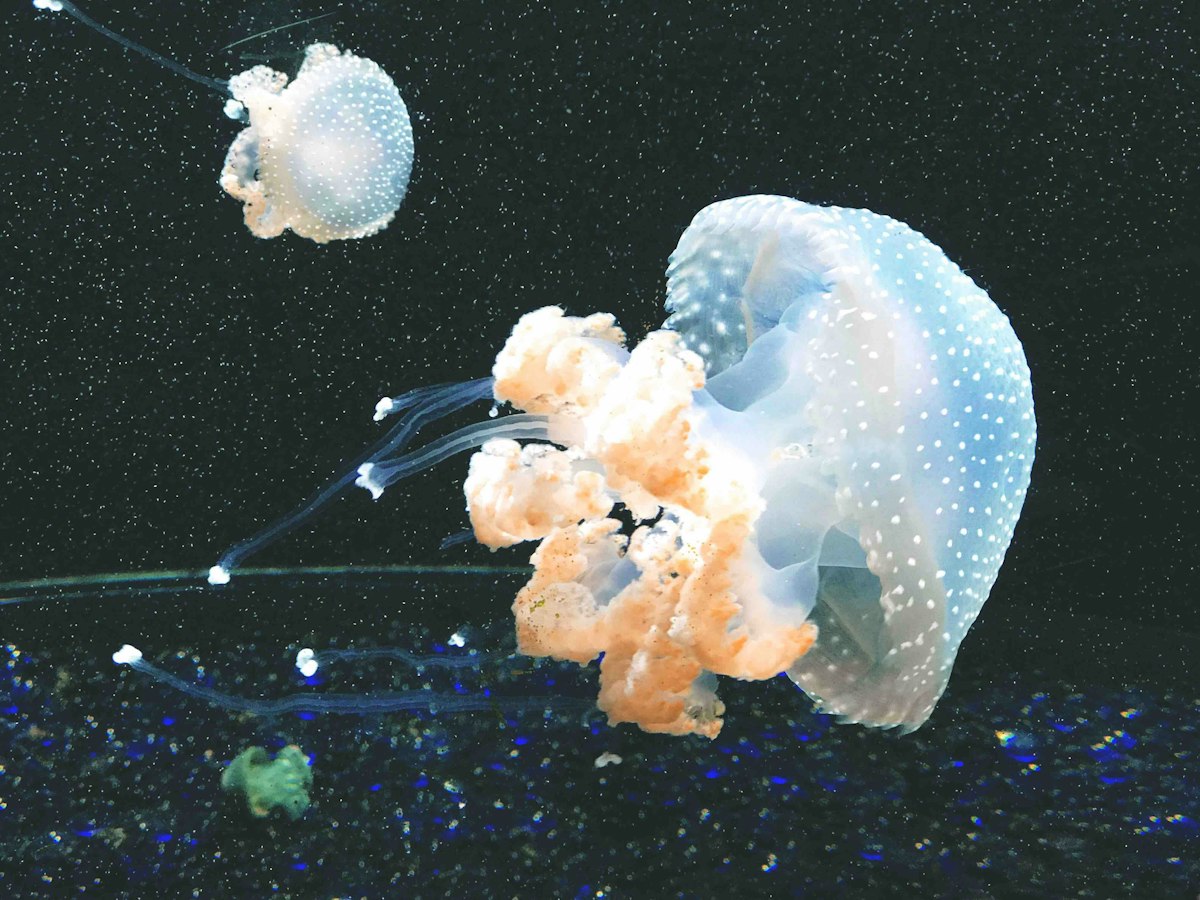
Japanese aquariums have elevated jellyfish presentation to an art form. Sumida Aquarium's jellyfish exhibit is renowned for its gallery-style columns and research-transparency lab. Kagoshima Aquarium's jellyfish room features circular tanks with color-changing LED lighting. The Aquarium of the Sea in Kochi has one of Japan's largest moon jellyfish exhibits. Jellyfish are now so popular that "jellyfish cafes" — spaces serving drinks beside illuminated jellyfish tanks — have spread to major cities.
Kaiyukan sits beside the Tempozan Marketplace in Osaka's bay area. The 112.5m Tempozan Ferris Wheel (one of Japan's largest) offers views of the entire Osaka Bay. Universal Studios Japan is 15 minutes by train. The bay area's cruise terminal has seasonal illumination events. The LEGOLAND Discovery Center (inside the same mall as Tempozan Marketplace) targets families with younger children. A "Kaiyukan + Ferris Wheel" combination ticket saves ¥300.
Buy tickets online in advance to skip queues — Kaiyukan and Sumida sell out on weekends and Japanese holidays. Arrive at opening time (usually 10 am) for the least crowded experience. Most aquariums prohibit flash photography and tripods. Food is generally allowed in lobby areas but not exhibit floors. Strollers can be borrowed at Kaiyukan and Churaumi for free. English audio guides are available at Kaiyukan and Churaumi. Gift shops stock unique marine-life merchandise that makes distinctive souvenirs.
Osaka Aquarium Kaiyukan and Okinawa Churaumi Aquarium are the two world-class benchmarks. Kaiyukan pioneered the Pacific Ring of Fire concept with whale sharks in a 5.4-million-liter tank. Churaumi holds the world's second-largest acrylic panel with whale sharks and manta rays together. Both are unmissable.
Kaiyukan Osaka: ¥2,700 adults. Churaumi Okinawa: ¥1,880 adults. Tokyo Sea Life Park: ¥700 adults (exceptional value). Sumida Aquarium: ¥2,400 adults. Hakkeijima Sea Paradise: free entry + attraction passes ¥1,800–3,200.
Yes — Kaiyukan (Osaka) and Churaumi (Okinawa) both exhibit whale sharks. Kaiyukan has housed whale sharks since 1995. Churaumi holds whale sharks and manta rays together in its Kuroshio Sea tank — found nowhere else in the world.
Hakkeijima Sea Paradise (Yokohama) combines aquarium with rides and dolphin shows — ideal for children 3–12. Kaiyukan's spiral design is great for all ages. Sumida Aquarium (Tokyo) is compact and stroller-friendly with an open jellyfish research lab.
Japanese aquariums lead globally in exhibit design, animal welfare, and theatrical presentation. Nighttime illumination events, jellyfish gallery-style exhibits, and open research labs make them unique. Many offer late-night hours on weekends.
Yes — Kaiyukan holds seasonal evening events, Sumida Aquarium is open until 9 pm daily, and Aqua World Oarai runs summer night events. These adult-oriented evenings combine mood lighting, cocktails, and a completely different atmosphere from daytime family visits.
Trip Planning Essentials