Japan Kendo Guide 2026
Dojo experiences, tournament watching, equipment shopping & the philosophy of Japan's way of the sword
Dojo experiences, tournament watching, equipment shopping & the philosophy of Japan's way of the sword
Kendo — the "way of the sword" — is practised by 8 million people in 57 countries, yet experiencing it in Japan is completely different from anywhere else. Here the dojo is sacred space, the kiai reverberates from wooden floors worn smooth by decades of practice, and tournaments at venues like the Nippon Budokan carry the weight of tradition going back to samurai Japan. Whether you want to try swinging a shinai yourself, watch elite competitors at a national championship, or simply understand what drives millions of practitioners to practise before dawn every day, this guide covers the real kendo experiences available to visitors.
| Venue | City | Type | Cost |
|---|---|---|---|
| Nippon Budokan | Tokyo (Kudanshita, Chiyoda) | National Martial Arts Arena — Tournament Venue | Tournament observation: free (general spectating areas); limited reserved seating |
| Musashino Budokan (Kendo Visitor Experience) | Tokyo (Musashino City) | Public Budokan — Beginner Kendo Sessions | Visitor lesson ¥1,500–¥2,500; equipment provided |
| Kyoto Budo Center (Kyoto Budokan) | Kyoto (Saiin, Ukyo-ku) | Regional Martial Arts Center | Observation: free during public sessions; Guided lesson ¥2,000–¥4,000 (advance booking) |
| Tozando (Budo Equipment Shop) | Kyoto (Kawaramachi/Sanjo area) | Premier Kendo Equipment Retailer | Browsing free; Equipment ¥3,000–¥100,000+; Ships internationally |
| Budo no Izumi (Kendo Experience, Tokyo) | Tokyo (Shinjuku area) | Tourist Kendo Experience — Fully English | Experience package ¥5,000–¥8,000 (includes uniform, equipment, photos) |
| Meiji Shrine Outer Garden (Kendo Observation) | Tokyo (Sendagaya, Shinjuku) | Free Kendo Observation Area | Free to observe; park entry free |
Stay in Tokyo — base for Nippon Budokan kendo, Musashino sessions & Meiji Jingu Gaien morning practice
Type: National Martial Arts Arena — Tournament Venue
Hours: Open for events only; tournament schedules at kendo.or.jp
Cost: Tournament observation: free (general spectating areas); limited reserved seating
Japan's national martial arts arena, built for the 1964 Tokyo Olympics and host of the All Japan Kendo Championships every November 3rd (Culture Day). The octagonal arena holds 14,000 spectators and fills with dedicated kendo fans for the all-day tournament — men's, women's, and team categories. Watching live kendo at the Budokan is an extraordinary experience: the sheer speed, the kiai shouts echoing in the hall, and the precision of elite competitors creates an atmosphere found nowhere else. Entry to the general spectating area is free.
Tip: Arrive early (before 9 AM) for the best floor-level viewing positions on the day of the All Japan Championships. Bring earplugs — the hall is loud. The surrounding Kitanomaru Park (adjacent to Chiyoda Moat) makes a pleasant lunch spot. Kudanshita Station (Tozai/Shinjuku/Hanzomon Lines) is 5 minutes on foot.
Type: Public Budokan — Beginner Kendo Sessions
Hours: Sessions Sat–Sun 9:00 AM – 12:00 PM (advance booking required)
Cost: Visitor lesson ¥1,500–¥2,500; equipment provided
The Musashino Budokan runs structured kendo visitor sessions for foreign tourists and beginners — one of the few public facilities in Tokyo that actively welcomes observers and beginners with English-language support. Sessions cover proper bowing etiquette, shinai handling, basic strikes (men/kote/do), and a supervised practice bout against a junior instructor. The Budokan is actively used by local kendo clubs, giving visitors an authentic environment rather than a tourist performance.
Tip: Book at least 10 days ahead via the Budokan's English contact form. Sessions run in groups of 4–8 — a smaller group gives you more one-on-one instruction time. Wear comfortable sportswear (no shorts) as the keikogi provided goes over your clothing. 12 minutes from Kichijoji Station (JR/Keio) by bus or 20-minute walk.
Type: Regional Martial Arts Center
Hours: 9:00 AM – 9:00 PM daily; events schedules vary
Cost: Observation: free during public sessions; Guided lesson ¥2,000–¥4,000 (advance booking)
Kyoto's primary martial arts centre hosts daily kendo practice by local clubs and regional tournaments. During regular practice hours (evenings), visitors can observe club training sessions from the second-floor gallery — an authentic window into how kendo is actually practised at club level. The center also houses a small kendo history exhibit and a display of kendo equipment through the ages. Guided visitor lessons in kendo and naginata (Japanese halberd) are available with advance booking.
Tip: Evening visits (6–8 PM weekdays) offer the most active practice to observe — multiple clubs practise simultaneously, and the sounds of shinai strikes and kiai shouts create an intense atmosphere. The center is in a quieter residential area of western Kyoto — 10 minutes by bus from Kyoto Station or 5 minutes from Saiin Station (Hankyu Kyoto Line).
Type: Premier Kendo Equipment Retailer
Hours: 10:00 AM – 7:00 PM daily
Cost: Browsing free; Equipment ¥3,000–¥100,000+; Ships internationally
Founded in 1935, Tozando is Japan's most respected kendo and budo equipment maker and retailer, with the flagship store in Kyoto. The showroom displays a full range of shinai, bokken, armour sets, keikogi, hakama, and practice equipment at every price point. Staff speak English and can advise on appropriate equipment for your level and intended use — from tourist souvenir bokken (¥3,000–¥5,000) to serious competition armour. The store also sells instructional DVDs and kendo-themed gifts.
Tip: Even if not buying equipment, Tozando is worth visiting for the display alone — the handcrafted bogu armour pieces are works of craft art. A beginner-level shinai set (shinai + bokken) makes an excellent Japan souvenir for martial arts enthusiasts (¥8,000–¥15,000, ships internationally). The store is 5 minutes on foot from Kyoto-Shijo Station (Hankyu Kyoto Line) or 10 minutes from Gion-Shijo Station (Keihan Line).
Type: Tourist Kendo Experience — Fully English
Hours: Sessions daily by booking (morning and afternoon slots)
Cost: Experience package ¥5,000–¥8,000 (includes uniform, equipment, photos)
A specialist cultural experience company running fully English kendo sessions designed for foreign tourists. The 90-minute programme covers the history of kendo, proper dojo etiquette (rei: bowing protocols), shinai basics, the five target areas, kiai practice, and a final demonstration bout against an instructor. Professional photos and a certificate of participation are included. No Japanese language required — instructors teach in English throughout.
Tip: This is the highest-cost but most accessible entry point — ideal if you want a guaranteed English-language experience without needing to navigate public budokan booking. Book via the company's English website 1–2 weeks in advance. Shinjuku location is easily accessible from most central Tokyo hotels. Group discounts available for 4+ people.
Type: Free Kendo Observation Area
Hours: Open daily; kendo practice typically 6–8 AM and evenings
Cost: Free to observe; park entry free
The open-air budokan areas within Meiji Jingu Gaien (the Outer Garden of Meiji Shrine) are used by various martial arts clubs for early morning and evening practice. During these hours, visitors can observe kendo, judo, and naginata practice from designated areas at no cost. The atmosphere — practitioners in traditional keikogi and hakama against the backdrop of Meiji Jingu's trees — is visually striking and authentically Japanese. Morning sessions (6–8 AM) are particularly atmospheric in cooler months.
Tip: This is pure observation — you cannot participate without club affiliation. Early morning visits are rewarding: practitioners take their training seriously and the quiet park setting before the city wakes up is memorable. Sendagaya Station (JR Sobu Line) or Gaienmae Station (Tokyo Metro Ginza Line) are 5–8 minutes on foot.
Kendo evolved from kenjutsu (classical sword fighting) practised by samurai from the 10th century onward. The shinai (bamboo sword) and protective armour (bogu) were developed in the 18th century, allowing full-contact practice without lethal injury. Modern kendo was systematised after the Meiji Restoration (1868) and adopted as school physical education in 1911. After WWII, kendo was banned by US occupation forces (1945–1950) as a militarist activity — its revival was crucial to the art's survival. Today 8 million practitioners across 57 countries are registered with the International Kendo Federation.
Kendo is competitive sparring with shinai and armour, emphasising sport and character development. Kenjutsu is the classical art of sword combat using wooden or live blades — focused on real battlefield technique rather than sport. Iaido is the meditative art of drawing, cutting, and resheathing the sword — practised solo against imaginary opponents (kata), never sparring. Battodo/tameshigiri is test-cutting with a live blade on rolled targets. All four are practised in Japan today; kendo has by far the largest active membership due to its accessibility and competitive structure.
A kendo match (shiai) is won by the first player to score two valid points (ippon). Valid strikes require hitting the target (men/head, kote/wrist, do/torso, or tsuki/throat) with the correct part of the shinai, proper posture, kiai (shout), and zanshin (continued alertness after the strike). Strikes without all elements are not awarded points — even a technically perfect hit without a kiai is invalid. Matches last 3–5 minutes; referees (3 per match) signal points with flags. Ties (0-0 after time) go to a 1-point sudden-death extension.
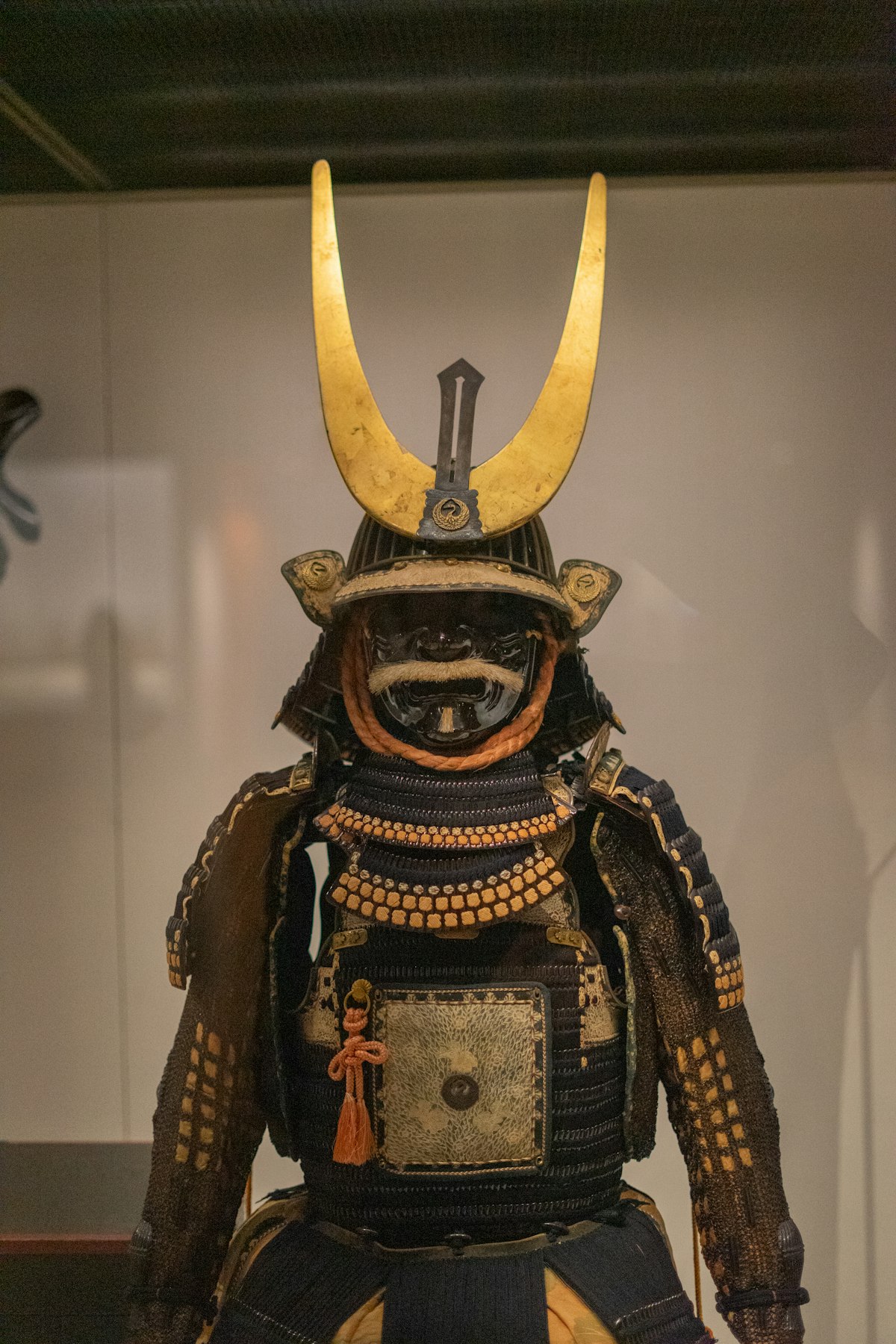
The four-piece kendo armour (bogu): men (helmet with face grille protecting the head, throat, and shoulders), kote (padded gloves protecting forearms and wrists), do (lacquered fibre breastplate protecting the torso), and tare (layered hip guard protecting the lower abdomen and thighs). All four targets correspond to the armour pieces: "men!" "kote!" "do!" "tsuki!" are called simultaneously with the strike. High-quality handmade bogu takes 100+ hours to produce and can cost ¥100,000–¥500,000 for a master-crafted set.
Entering a dojo requires proper bowing (rei) — first toward the shinzen (altar/highest point of the dojo), then to the sensei (teacher). Shoes are removed at the entrance; socks are worn on the dojo floor. Students line up in rank order (highest rank on the right). Never step over a shinai or bokken — always go around it. Practice begins with mokuso (seated meditation, 1–2 minutes) and ends the same way. Respectful behaviour toward all practitioners regardless of rank is fundamental. Visitors should bow when entering and exiting.
Kendo is one of the most internationally practised Japanese martial arts. The International Kendo Federation (FIK) has 57 member nations. The World Kendo Championships (held every 3 years since 1970) is the sport's highest international competition — Japan has won the men's team title at every tournament. South Korea, France, and the United States have strong national teams. Kendo's international growth is driven by Japanese diaspora communities, martial arts enthusiasts, and cultural interest in Japan. Practice gear can be purchased online from specialist shops that ship globally.
Stay in Kyoto — base for Kyoto Budo Center, Tozando equipment shopping & regional kendo tournaments
Yes — several Tokyo dojos and cultural centres offer kendo experiences for tourists with no prior experience required. Sessions typically run 60–90 minutes and include basic instruction in striking technique, shinai (bamboo sword) handling, and a short practice bout. The Tokyo Budokan, Musashino Budokan, and several private dojos offer English-friendly sessions. Booking in advance is required at most venues (1–2 weeks ahead). Kendo uniform (keikogi and hakama) is usually provided, or you can wear comfortable sportswear for observation sessions.
For observation or beginner sessions, you need nothing — equipment is provided. For serious training, full kendo gear includes: shinai (bamboo sword, ¥3,000–¥20,000), bokken (wooden training sword, ¥2,000–¥8,000), men (helmet, ¥15,000–¥80,000), do (chest protector, ¥8,000–¥50,000), kote (gloves, ¥8,000–¥30,000), tare (hip/thigh protector, ¥5,000–¥20,000), keikogi (practice jacket, ¥3,000–¥15,000), and hakama (wide-leg trousers, ¥5,000–¥30,000). Tozando in Kyoto is the best shop for quality equipment and ships internationally.
Kendo (剣道, "way of the sword") is a modern Japanese martial art that descended from traditional kenjutsu sword fighting. Unlike kenjutsu or iaido (which use real or wooden swords), kendo uses a shinai (four-segment bamboo sword) and full protective armour (bogu), allowing full-contact striking practice. Points are scored by landing strikes on valid targets (men/head, kote/wrist, do/body, tsuki/throat) with proper spirit, technique, and follow-through. Iaido focuses on drawing and sheathing the sword; kendo is competitive sparring.
Major kendo tournaments: All Japan Kendo Championships (Nippon Budokan, Tokyo, November 3rd each year — free spectating), All Japan Women's Kendo Championships (Nippon Budokan, October), World Kendo Championships (held every 3 years internationally, next in 2027). Regional tournaments are held at prefectural budokan throughout Japan and are free to watch. Check the All Japan Kendo Federation website (kendo.or.jp) for schedules. University kendo club practices at major universities (Keio, Waseda, Meiji) are sometimes open to observation — contact the club directly.
The All Japan Kendo Federation defines the purpose of kendo as "to discipline the human character through the application of the principles of the katana." Kendo emphasises ki-ken-tai-ichi — the unity of spirit, sword, and body — requiring simultaneous striking, kiai (shout), and forward step at the moment of contact. Practice is structured by ranks (dan/kyu) and governed by strict dojo etiquette. Winning a point through technique alone without proper spirit and posture is not accepted. The goals are self-improvement and character development as much as competitive victory.
Basic technique takes 6–12 months of regular practice (2–3 times per week) to reach a functional level for dojo sparring. Rank progression: white belt (no rank), then kyu grades (6-kyu to 1-kyu), then dan grades (1-dan to 8-dan). 1-dan (equivalent to a black belt in other arts) typically takes 1–2 years. 8-dan, the highest rank, requires 10 years minimum at 7-dan and a very low pass rate — it represents a lifetime of dedication. Kendo is practised seriously until old age; many 70+ year old masters remain active.
Let our AI planner create a custom itinerary combining kendo dojo visits, Nippon Budokan tournaments, and hotel picks near Japan's best martial arts venues.
Plan My Japan Trip →