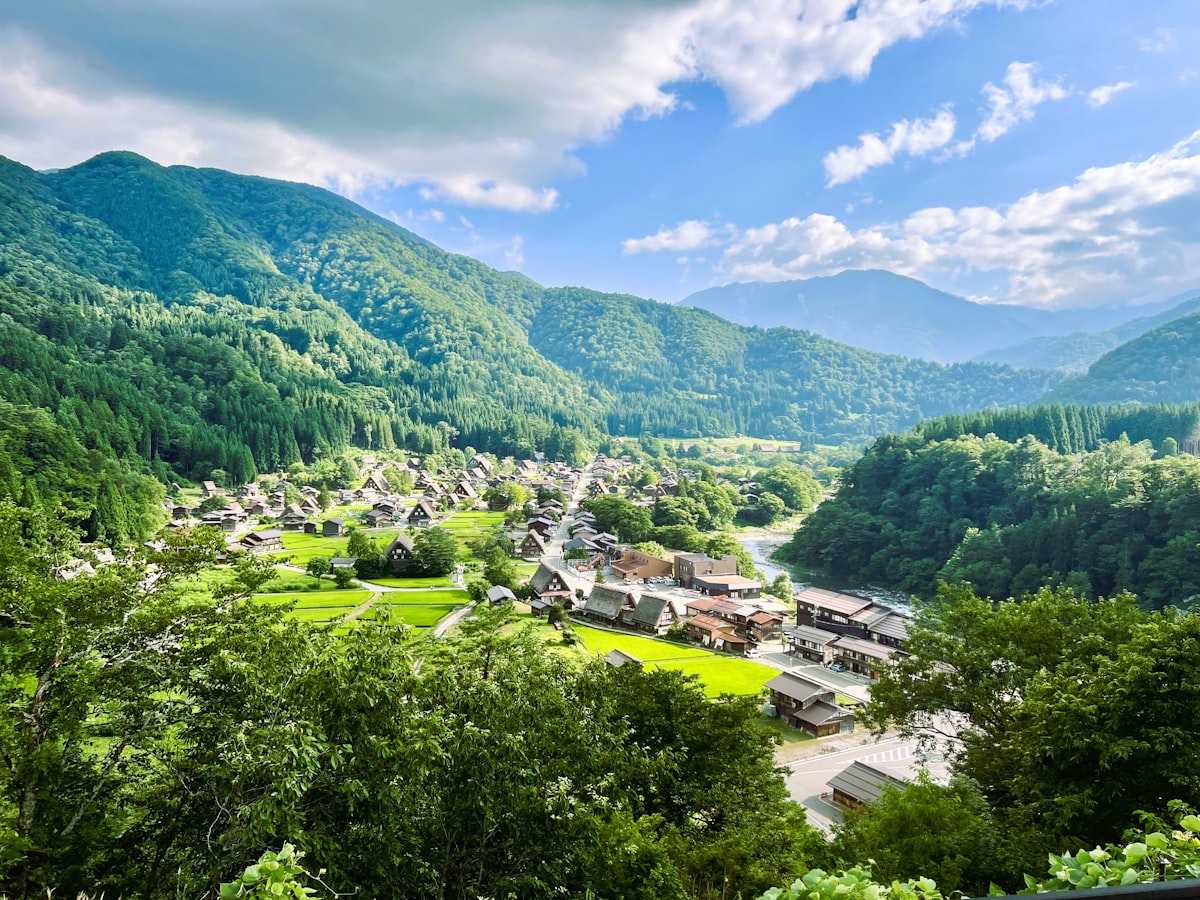
Yamagata Travel Guide
Yamadera Temple · Zao Snow Monsters · Ginzan Onsen · Yonezawa Beef
✈ Plan Your Yamagata Trip FreeYamagata Prefecture (山形県) in northern Tohoku combines some of Japan's most dramatic natural and cultural experiences within easy reach of Tokyo (2h 20min by Shinkansen). The prefecture offers four genuinely distinct world-class experiences: Yamadera's 1,015 stone steps through an ancient cedar forest to cliff-edge shrines above river valleys; Zao Onsen's January–February snow monster forest of ice-encased Siberian firs illuminated at night; Ginzan Onsen's single street of Taisho-era gaslit wooden ryokan reflecting in a mountain stream; and the Yamagata Hanagasa Festival's 10,000 dancers celebrating the region's safflower heritage.
Layer in Japan's original premium wagyu at Yonezawa, cherry orchards producing Japan's finest Sato Nishiki cherries, the sacred Dewa Sanzan mountain pilgrimage, and autumn foliage that turns the Yamadera cliff face orange-red — and Yamagata becomes one of Tohoku's richest multi-season destinations for travelers ready to venture north of Sendai.
Top Attractions in Yamagata
Yamadera (Risshakuji Temple)
山寺(立石寺)One of Japan's most dramatic temple complexes — Risshakuji, universally known as Yamadera ("mountain temple"), was founded in 860 AD and clings to the face of a 300-metre granite cliff above the Tachiya River valley. The ascent via 1,015 stone steps passes through ancient cedar forest and past small carved stone Buddha figures half-submerged in moss, leading to the Okuno-in Main Hall and a series of cliff-edge sub-temples with vertigo-inducing views across the Yamagata Basin below. The haiku poet Matsuo Basho visited in 1689 and composed his most famous poem here: "Such silence — the cicadas' cries sink into the stone."
Highlights
- ▸1,015 stone steps through ancient cedar forest — each step is said to bring spiritual merit
- ▸Cliff-edge Godaido observation deck — panoramic views across the Yamagata Basin
- ▸Konponchu-do Hall (1356) — Japan's oldest continuous flame burning for 1,100+ years
- ▸Matsuo Basho haiku monument (1689) — Japan's most famous haiku composed here
- ▸Nio-mon Guardian Gate at the base — two fierce guardian figures flanking the entrance
Zao Onsen & Snow Monsters (Juhyo)
蔵王温泉・樹氷Japan's most extraordinary winter spectacle — the Zao Onsen ski resort on the Zao mountain plateau at 1,800 metres altitude transforms every January and February into a landscape of snow monsters: Siberian fir trees (Abies veitchii) encased in successive layers of rime ice and snow until they become towering white shapes resembling the ice giants of fantasy. The Zao Ropeway ascends through the monster forest and the effect is genuinely alien. At night, the snow monsters are illuminated from below in colored lights — an ethereal display unique to Zao. Zao's hot spring itself (tsutaya green-sulfur water, one of Japan's strongest sulfur concentrations) is one of Tohoku's finest.
Highlights
- ▸Snow monsters (juhyo) — Siberian fir trees fully encased in rime ice, only at Zao (January–February)
- ▸Night illumination of snow monster forest — colored lights turning the alien forest magical
- ▸Zao Ropeway through the juhyo forest — windows close enough to touch the ice giants
- ▸Zao hot spring (okama crater lake, emerald green, 2,156m) — accessible May to October
- ▸Monster Loop course skiing — descend through the snow monster forest on skis
Ginzan Onsen
銀山温泉Japan's most photogenic hot spring town — Ginzan Onsen (Silver Mountain Hot Spring) is a cluster of Taisho-era (1912–1926) multi-story wooden ryokan inns built in a style influenced by Western Art Nouveau, lining both sides of a narrow mountain valley stream. At night, gas lamps light the street and the buildings reflect in the rushing water below — creating a scene so perfectly cinematic that it inspired director Hayao Miyazaki's bathhouse setting in Spirited Away. The spring was discovered in 1400 by silver miners; the current ryokan street dates from a 1913 fire that prompted the distinctive wooden reconstruction. Only 11 ryokan inns line the single street, making it one of Japan's smallest and most intimate onsen towns.
Highlights
- ▸Taisho-era wooden ryokan street over a mountain valley stream — Japan's most photogenic hot spring setting
- ▸Gas lantern illumination at night — the single street transforms into a glowing Meiji-Taisho dreamscape
- ▸Reputed inspiration for the Spirited Away bathhouse setting (claimed, not officially confirmed)
- ▸Shirogane Falls — 22m waterfall 15 min walk up the valley beyond the ryokan street
- ▸Only 11 ryokan inns — among Japan's most intimate and exclusive onsen overnight experiences
Yamagata Hanagasa Festival
山形花笠まつりOne of Tohoku's five great festivals — the Yamagata Hanagasa Matsuri (Flower Hat Festival) fills Yamagata city's main streets for three consecutive nights each August (5–7) with more than 10,000 dancers in layered yukata (summer kimono) performing the Hanagasa-ondo folk dance while waving straw hats decorated with safflower blossoms. The dancers process through the city in long processions accompanied by taiko drums, flutes, and the repeating chant "Yassho makasho!" The safflower (benibana), Yamagata's prefectural flower, was once grown for red dye used in Kyoto court robes — the festival celebrates this historic connection.
Highlights
- ▸10,000+ dancers in yukata performing the Hanagasa-ondo folk dance through city streets
- ▸Flower straw hats (hanagasa) decorated with Yamagata's safflower — symbolic of regional history
- ▸Taiko drum processions and wooden flute accompaniment — one of Tohoku's most distinctive musical rhythms
- ▸Audience participation sections where visitors can join the dance procession
- ▸One of Japan's five great Tohoku festivals alongside Sendai Tanabata and Aomori Nebuta
Dewa Sanzan (Three Sacred Mountains)
出羽三山The three sacred mountains of Dewa (Dewa Sanzan) — Mount Haguro (birth), Mount Gassan (death), and Mount Yudono (rebirth) — have been the center of Shugendo mountain asceticism for 1,400 years. Yamabushi warrior-monks in white robes still practice the ancient training route in summer. The approach to Mount Haguro takes pilgrims up 2,446 stone steps through a forest of 500-year-old cedar trees to the dramatic Five-Story Pagoda (one of Japan's finest) and the thatched Sanjin Gosaiden shrine at the summit. Mount Yudono has Japan's most unusual sacred site: visitors literally walk barefoot over a warm sacred rock emerging from a natural hot spring.
Highlights
- ▸2,446 stone steps through 500-year-old cedar forest — one of Japan's great mountain pilgrimage walks
- ▸Kotakuji Five-Story Pagoda in the cedar forest — one of Japan's most beautiful pagodas in a forest setting
- ▸Mount Yudono sacred hot spring rock — visitors walk barefoot over warm mineral rock (photos forbidden)
- ▸Yamabushi ascetic mountain monks in white robes — practicing Shugendo training May–September
- ▸Thatched roof Sanjin Gosaiden shrine at Mount Haguro summit — enshrines all three mountains' deities
Kaminoyama Castle & Yamagata City
上山城・山形市Kaminoyama Castle (1535, reconstructed 1982) overlooks the hot spring town of Kaminoyama Onsen south of Yamagata city — a compact feudal castle with a museum of Yamagata's samurai history and panoramic views of the Yamagata Basin. The castle grounds contain 1,500 cherry trees that rank among Tohoku's finest spring blossom sites. Yamagata city itself has the Yamagata Art Museum, the historic Bunshokan (1916 Western-style prefectural office), and the Hanagasa Festival floats on permanent display. The Yamagata city morning market (Kasumi-cho) sells local produce including Yamagata's prized cherries (May–July).
Highlights
- ▸Kaminoyama Castle on a hilltop above a hot spring town — samurai history and alpine views
- ▸1,500 cherry trees around the castle grounds — one of Tohoku's best spring blossom sites
- ▸Yamagata city Hanagasa float display — year-round exhibition of festival costumes and floats
- ▸Kaminoyama Onsen foot baths (ashiyu) — free public foot soaks along the hot spring town streets
- ▸Yamagata morning market — Yamagata cherries (Sato Nishiki variety) direct from orchards May–July
Yamagata Food Guide — What to Eat
Yonezawa Beef (Yonezawa-gyu)
米沢牛One of Japan's original three great wagyu brands — Yonezawa beef predates both Kobe and Matsusaka as a recognized premium brand, with records of high-quality Yonezawa cattle dating from the Meiji period. Raised in Yamagata's Yonezawa valley, the cattle benefit from clean mountain spring water and locally grown rice straw feed. Yonezawa beef is famous for its sweet, buttery fat and distinctive flavor depth. The primary preparation is sukiyaki (sweet-soy hot pot), available at traditional ryotei restaurants in Yonezawa city that have specialized in this preparation for generations.
Where: Yonezawa city sukiyaki restaurants (1h 20min from Yamagata by JR); premium restaurants in Yamagata city
Price: ¥6,000–20,000 for sukiyaki course in Yonezawa; ¥3,000–5,000 for Yonezawa beef steak
Imoni (Taro Stew)
芋煮Yamagata's defining autumn community ritual — imoni is a taro root and meat stew cooked in massive outdoor pots (some big enough for 3,000 servings) along the banks of the Mamigasaki River in Yamagata city every September. The Yamagata Imoni Festival (third Sunday of September) features an 8-metre pot serving 30,000 portions of beef and taro imoni. The Yamagata-style uses soy-sauce broth with beef; neighboring Miyagi Prefecture uses miso with pork — the difference is a source of good-natured regional rivalry. Small-group imoni are also cooked on riverbanks throughout Yamagata Prefecture every autumn.
Where: Mamigasaki Riverbank Imoni Festival (September); traditional restaurants in Yamagata city year-round
Price: ¥500–800 for festival imoni; ¥1,200–2,000 for restaurant version
Yamagata Cherries (Sato Nishiki)
山形さくらんぼ(佐藤錦)Japan's premier cherry-growing prefecture — Yamagata produces over 70% of Japan's total domestic cherry harvest. The Sato Nishiki variety (developed in Yamagata in 1928) is considered Japan's finest cherry: a large, heart-shaped fruit with a distinctive balance of sweetness and tartness, thin skin, and juicy flesh. The harvest season runs late May to mid-July. Cherry orchards throughout the Higashine, Tendo, and Yamagata areas offer "cherry picking" (sakuranbo gari) where visitors pay to eat directly from the trees. Boxes of Sato Nishiki in Yamagata cost significantly less than Tokyo department store prices.
Where: Cherry orchards in Higashine and Tendo (pick-your-own May–July); Yamagata Station gift shops; Kaminoyama morning market
Price: ¥1,500–2,500 per person for orchard pick-your-own (30 minutes); ¥1,000–2,500 per box
Yamagata Soba Noodles
山形そばYamagata Prefecture is one of Japan's top soba (buckwheat noodle) regions — the cold mountain climate produces high-quality buckwheat with distinctive fragrance. Yamagata's soba tradition uses cold-water stone-grinding and same-day preparation. The "hiyashi" (cold) soba presentation — chilled noodles with dipping sauce alongside mountain vegetable tempura — is a Yamagata summer specialty that local people eat even in winter because the quality demands it. The Kaneyama area of northern Yamagata is the premium soba heartland, with traditional thatched-roof farmhouses converted into soba restaurants.
Where: Soba specialty restaurants throughout Yamagata city; Kaneyama area farmhouse soba restaurants; Yamadera area restaurants
Price: ¥900–1,800 per soba set
Sagae Beef & Mountain Vegetables
寒河江牛・山菜Yamagata's mountain geography produces outstanding sansai (wild mountain vegetables) — bracken fern (warabi), butterbur (fuki), and mountain wasabi harvested in spring from the Zao and Ou Mountain slopes. Served as tempura, pickles, or mixed into soba, sansai represents the cleanest flavors of Yamagata's highland spring. Sagae beef (from Sagae city, 30 min from Yamagata) is a less-famous but excellent local wagyu, served at considerably lower prices than Yonezawa beef. Traditional ryokan kaiseki dinners in Yamagata and Ginzan Onsen typically feature both sansai and local beef.
Where: Traditional ryokan kaiseki dinners in Yamagata and Ginzan Onsen; mountain restaurants near Zao and Yamadera
Price: ¥800–1,500 for sansai tempura set; ¥3,000–6,000 for Sagae beef dinner
Benibana (Safflower) Products
紅花Yamagata's historic cash crop — safflower (benibana) was cultivated in the Mogami River valley from the Edo period for its deep red dye, used in silk textiles for the Kyoto imperial court. The flower fields peak in late June–early July in the Kawanishi area, where orange-red fields are a striking sight. Benibana products include herbal teas (the flowers have mild blood-flow benefits), cosmetics, and textile dyes. The Yamagata Hanagasa Festival (August) celebrates this history with safflower-decorated straw hats worn by 10,000 dancers.
Where: Kawanishi benibana fields (late June–July); Yamagata craft shops selling benibana dyed textiles; Yamagata Station souvenir shops
Price: ¥500–2,000 for benibana products
Where to Stay in Yamagata
Yamagata city has modern hotels from ¥7,000/night — convenient for Yamadera day trips and the Hanagasa Festival. Ginzan Onsen has 11 exclusive Taisho-era ryokan from ¥25,000/night including kaiseki dinner. Zao Onsen has ski lodges and traditional ryokan from ¥12,000/night.
Hotels in Yamagata City
Base for Yamadera day trips (15 min by JR), Hanagasa Festival attendance, and Zao Onsen access. Business hotels from ¥7,000/night; convenient for Shinkansen connections from Tokyo (2h 20min)
Tours & Activities in Yamagata
Zao snow monster ropeway tours, Yamadera temple guided walks, Ginzan Onsen ryokan experiences, Dewa Sanzan mountain pilgrimage guided hikes, Yonezawa beef sukiyaki dinner experiences, Yamagata Hanagasa Festival participation tours, and cherry orchard picking (May–July).
Getting to Yamagata
From Tokyo
2h 20min by ShinkansenMethod: JR Yamagata Shinkansen (Tsubasa) from Tokyo Station directly to Yamagata — a Mini-Shinkansen that runs through standard-gauge track from Fukushima. Seats are narrower than standard Shinkansen but the journey is direct with no transfer
Cost: ¥11,950 (reserved seat, one-way); covered by JR Pass
The Yamagata Shinkansen (Tsubasa) departs from Tokyo Station and divides from the Tohoku Shinkansen at Fukushima — no transfer required, just stay on the train. From Yamagata city, Yamadera is 15 min by JR Senzan Line. Book reserved seats for Golden Week and autumn foliage season.
From Sendai
45 min by JR Senzan Line (to Yamadera) / 1h to Yamagata cityMethod: JR Senzan Line from Sendai to Yamadera (44 min) and Yamagata city (1h) — a scenic local train through the Nishizao mountain valley, one of Tohoku's most beautiful railway routes
Cost: ¥860 Sendai–Yamadera; ¥1,170 Sendai–Yamagata; covered by JR Pass
The Sendai–Yamagata Senzan Line route passes through mountain river gorges and is one of Tohoku's most scenic local trains. Yamadera can be visited as a day trip from Sendai (departures every 60–90 min). A combined Sendai + Yamagata itinerary is ideal for exploring northern Tohoku.
From Akita / Aomori (Tohoku Circuit)
1h 30min by JR Ou Main Line from AkitaMethod: JR Ou Main Line from Akita or Shinjo south through the Mogami River valley to Yamagata — a scenic rural route through the heart of Tohoku
Cost: ¥3,020 Akita–Yamagata; covered by JR Pass
Yamagata fits naturally into a Tohoku circuit: Aomori (Nebuta) → Akita (Kanto Festival) → Yamagata (Hanagasa Festival) → Sendai (Tanabata) — all four festivals occur in the first two weeks of August, making a compact Tohoku summer festival circuit possible.
From Niigata / Hokuriku
1h 30min by JR expressMethod: JR Uetsu Main Line to Tsuruoka (gateway to Dewa Sanzan), then JR to Yamagata — connects the Japan Sea coast with the Pacific-facing Tohoku region through Yamagata Prefecture
Cost: ¥2,640 Niigata–Tsuruoka + ¥1,520 Tsuruoka–Yamagata; JR Pass accepted
Tsuruoka (30 min from the Dewa Sanzan sacred mountains) is a worthwhile overnight stop combining a Dewa Sanzan pilgrimage hike with the journey between Niigata and Yamagata. The area around Tsuruoka is one of Yamagata's finest farm-to-table culinary destinations.