Japan Samurai Guide 2026
Sword training, original castles, yabusame archery, armour rental & the real history of Japan's warrior class
Sword training, original castles, yabusame archery, armour rental & the real history of Japan's warrior class
Samurai defined Japanese culture for nearly a thousand years — and their legacy is woven into the country's castles, sword traditions, martial arts, and philosophy. Whether you want to swing a bokken in a Gion dojo, walk through Himeji Castle's original 1618 tower, watch mounted archers gallop past you at Kamakura's Reitaisai festival, or simply understand the real meaning of bushido, Japan offers experiences that go far beyond dressed-up photo shoots. This guide covers the best of them.
| Venue | City | Type | Admission |
|---|---|---|---|
| Samurai Museum Tokyo | Tokyo (Shinjuku) | Samurai Museum & Performance | Adults ¥1,800; Children (6–12) ¥900; Under 6 free; Armour photo +¥1,000 |
| Samurai Kembu Theater (Kyoto) | Kyoto (Gion) | Sword Training & Performance | Show only: ¥3,000; Show + Workshop: ¥5,000–¥8,000 |
| Himeji Castle | Himeji, Hyogo | UNESCO Original Castle | Adults ¥1,000; Children ¥300; Combined with Kokoen Garden ¥1,050 |
| Hikone Castle | Hikone, Shiga | Original Castle & Samurai District | Adults ¥800; Children ¥200; Combined with Genkyu-en Garden ¥1,050 |
| Toei Uzumasa Eigamura (Kyoto) | Kyoto (Uzumasa) | Film Theme Park with Samurai Shows | Adults ¥2,400; Children ¥1,200; Armour rental ¥2,000 |
| Tsurugaoka Hachimangu Shrine (Yabusame) | Kamakura, Kanagawa | Yabusame Horseback Archery Event Site | Shrine: free; Reitaisai events: free to watch |
Stay in Tokyo — base for Samurai Museum, Kamakura yabusame & Nikko day trips
Type: Samurai Museum & Performance
Hours: 10:30 AM – 9:00 PM daily (last entry 8:30 PM)
Cost: Adults ¥1,800; Children (6–12) ¥900; Under 6 free; Armour photo +¥1,000
A three-floor museum in Shinjuku's Kabukicho district displaying authentic samurai armour, kabuto helmets, swords, and historical documents spanning the 15th to 19th centuries. Live bilingual performances of samurai combat and sword techniques run every 30 minutes. The armour collection includes examples worn in actual battles, including pieces from the Sengoku period (1467–1615). English guides available.
Tip: Book the armour photo session at the ticket counter — you'll be dressed in a full yoroi set and photographed by staff in a replica castle backdrop (15–20 minutes, ¥1,000 extra). Evening visits (after 6 PM) are less crowded. The sword floor (3F) has the most impressive individual pieces.
Type: Sword Training & Performance
Hours: Shows at 3:00 PM, 4:30 PM, 6:00 PM; workshops by booking
Cost: Show only: ¥3,000; Show + Workshop: ¥5,000–¥8,000
Kembu is a classical Japanese art combining sword and fan dancing with poetic recitation. Samurai Kembu Theater in Gion offers professional performances of this nearly-lost art form, followed by optional beginner workshops in basic sword kata and choreography using bokken (wooden swords). The small theatre atmosphere and Gion location create an intimate, theatrical samurai experience unlike any museum.
Tip: The combined show + workshop (¥5,000) is the best value — you perform a simplified version of what you just watched. Book at least 3 days ahead for English-language workshops (Tue/Thu/Sat typically). Combine with a Gion geisha district evening walk for a full traditional Kyoto experience.
Type: UNESCO Original Castle
Hours: 9:00 AM – 5:00 PM (last entry 4:00 PM); closed Dec 29–30
Cost: Adults ¥1,000; Children ¥300; Combined with Kokoen Garden ¥1,050
Japan's most celebrated castle and a UNESCO World Heritage Site since 1993. Himeji-jo (White Heron Castle) is the finest surviving example of feudal Japanese castle architecture — a 6-story main tower built in 1618, surrounded by a complex defensive system of concentric walls, gatehouses, and moats. Unlike many reconstructed castles, Himeji's tower is entirely original. The white plaster exterior gives it its nickname.
Tip: Allow 2.5–3 hours for the main tower (significant stair climbing) and Nishinomaru garden. Cherry blossom season (late March–early April) is spectacular but massively crowded — arrive before 9 AM. 5 minutes on foot from Himeji Station (1 hour from Shin-Osaka on Shinkansen).
Type: Original Castle & Samurai District
Hours: 8:30 AM – 5:00 PM daily
Cost: Adults ¥800; Children ¥200; Combined with Genkyu-en Garden ¥1,050
One of Japan's four original castle towers designated as National Treasures, Hikone Castle overlooks Lake Biwa. Built between 1604–1622, its compact three-story tower survived the Meiji era demolition that destroyed most castles. The adjacent Genkyuen Garden (Edo-period daimyo garden) and the preserved samurai district (Nagahama and Yonbancho streets) with merchant townhouses complete a full half-day of feudal atmosphere.
Tip: Hiko-nyan, Hikone's beloved cat mascot character, appears at the castle grounds twice daily (typically 10 AM and 2 PM) — families with children should check the schedule. 6 minutes on foot from Hikone Station (50 minutes from Kyoto on JR Biwako Line). Less crowded than Himeji or Osaka Castle.
Type: Film Theme Park with Samurai Shows
Hours: 9:00 AM – 5:00 PM (hours vary by season)
Cost: Adults ¥2,400; Children ¥1,200; Armour rental ¥2,000
A working Toei film studio open to tourists, with preserved Edo-period townscapes used in samurai period dramas. Daily jidaigeki (period drama) performances feature live samurai sword fights, a ninja chase, and theatrical recreations of Edo-era street scenes. Costume rental includes samurai armour, kimono, and ninja outfits — photographers can use the full set backdrops throughout the day.
Tip: The samurai sword fight shows (11 AM and 2:30 PM) are highly theatrical and visually impressive. Combine with the ninja show on the same day. 15 minutes from Kyoto Station by bus (¥230) — the Keifuku Randen tram line from Shijo Omiya also stops at Uzumasa Eigamura-mae.
Type: Yabusame Horseback Archery Event Site
Hours: Shrine: 6:00 AM – 8:30 PM; Yabusame: September Reitaisai festival
Cost: Shrine: free; Reitaisai events: free to watch
The most accessible yabusame (mounted archery) event for visitors from Tokyo is held at Tsurugaoka Hachimangu Shrine during the September Reitaisai (Grand Festival). Archers in full samurai regalia gallop along a 255-metre track, shooting at three wooden targets. The event also includes a procession of dancers, musicians, and shrine attendants in period costume. The shrine itself is the spiritual heart of Kamakura's samurai culture.
Tip: The yabusame event (typically held on the third Sunday of September) begins at 1 PM — arrive by noon for a viewing spot along the course. Standing areas are free; designated seating at rear can fill quickly. Kamakura is 50 minutes from Tokyo's Shinjuku by Shonan-Shinjuku Line (¥920).
The samurai (also called bushi) were Japan's military nobility from the 10th to 19th centuries. They served feudal lords (daimyo) under a strict code of loyalty and honour. At their peak in the Edo period (1603–1868), samurai comprised about 5–6% of Japan's population. The class was officially abolished in 1873 during the Meiji Restoration, which replaced the feudal army with a Western-style conscript military. Descendants of samurai families still exist throughout Japan.
Bushido (武士道) is the ethical code associated with samurai — emphasising loyalty (chuu), honour (meiyo), courage (yuuki), righteousness (gi), benevolence (jin), respect (rei), and sincerity (makoto). The code was largely codified in the 17th century, not as a rule set but as philosophical literature. Nitobe Inazo's 1900 book "Bushido: The Soul of Japan" popularised the concept internationally. Modern Japanese corporate culture echoes several bushido principles.
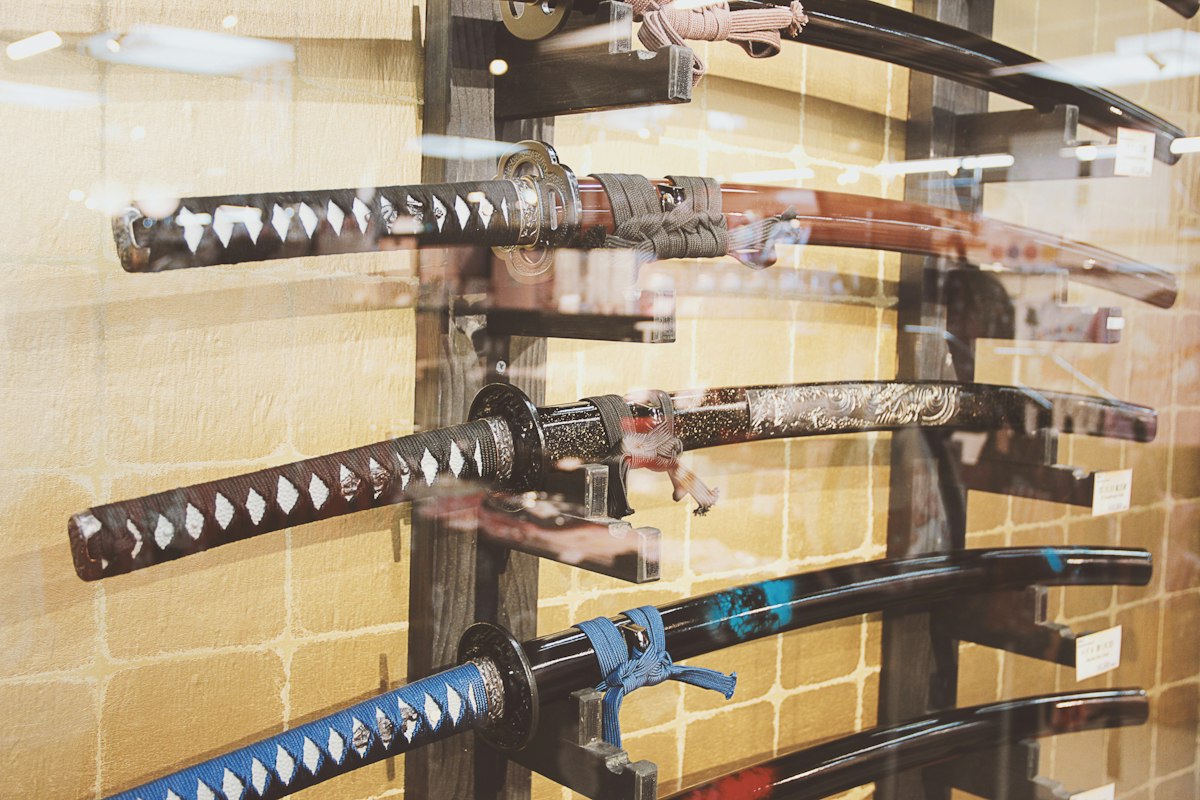
The katana is a curved, single-edged sword with a blade length of 60–80 cm. Its production involves weeks of repeated folding and tempering of high-carbon tamahagane steel — a process that can take a master swordsmith 2–3 months per blade. The distinctive hamon (temper line) running along the blade edge is a visual signature of quality and style. Authentic antique katana can sell for ¥1 million to over ¥100 million at auction. Carrying a real katana in Japan requires a permit.
Full samurai armour evolved over 1,000 years from simple iron lamellar to elaborate lacquered and silk-laced o-yoroi. Key components: kabuto (helmet with menpo face guard), do (breastplate), kote (arm protection), haidate (thigh guards), and suneate (shin guards). Colour combinations and family crests identified warriors in battle. A complete high-quality suit could take a year to produce and was passed down as a family heirloom. The most prized examples are held in national museums.
Japan once had over 5,000 castles — most were destroyed in civil wars, the Meiji Restoration (1868), or WWII bombing. Only 12 original castle towers survive: Himeji, Matsumoto, Hikone, Inuyama (National Treasures); Marugame, Bitchu-Matsuyama, Maruoka, Uwajima, Kochi, Matsuyama, Ozu, and Hirosaki. Many famous castles (Osaka, Nagoya, Kumamoto, Edo/Tokyo) are modern concrete reconstructions — historically informative but not original structures.
Japan's most celebrated historical samurai: Miyamoto Musashi (1584–1645) — legendary swordsman, strategist, and author of "The Book of Five Rings." Tokugawa Ieyasu (1543–1616) — unified Japan and founded the Edo shogunate. Oda Nobunaga (1534–1582) — first great unifier, ruthless moderniser. Takeda Shingen (1521–1573) — master strategist celebrated in popular culture. Honda Tadakatsu (1548–1610) — said to have fought in over 100 battles without a wound.
Stay in Kyoto — base for Kembu Theater, Uzumasa Eigamura & Himeji/Hikone Castle day trips
Kyoto has the most English-friendly sword training experiences: Samurai Kembu Theater (Gion area) offers 60-minute kata performances + beginner sword handling workshops (¥3,000–¥6,000); En (near Kyoto Station) runs kenjutsu workshops including iaido (sword drawing) for beginners (¥4,000, book online). In Tokyo, Samurai Aikido Experience in Shibuya offers staged sword combat workshops. All venues use safety bokken (wooden training swords) — not live blades.
Yes — several Tokyo and Kyoto studios offer full samurai armour (yoroi) rental with photo sessions. Toei Uzumasa Eigamura in Kyoto includes armour rental with park admission. In Tokyo, Samurai Museum Shinjuku offers armour photo sessions. Typical cost: ¥2,000–¥5,000 for 30–60 minutes including photos. Armour pieces include the kabuto helmet, do (breastplate), kote (arm guards), and suneate (shin guards). Weight is significant — plan for a seated photo if elderly or have back concerns.
The Samurai Museum in Shinjuku (Tokyo) is the most tourist-friendly — a 3-floor collection of authentic armour, helmets, swords, and documents with English explanations and a live performance of samurai combat demonstrations. Open 10:30 AM – 9:00 PM daily; adults ¥1,800. For a more academic experience, the Tokyo National Museum in Ueno has exceptional samurai weapons and armour in its permanent collection (¥1,000). Kumamoto City Museum and Hikone Castle Museum display important regional samurai artefacts.
Yabusame is the ancient art of mounted archery — an archer at full gallop shoots three arrows at wooden targets. It was practiced by samurai for both training and Shinto ritual. Major public yabusame events: Tsurugaoka Hachimangu Shrine in Kamakura (September Reitaisai festival), Nikko Toshogu Shrine (May and October), Asakusa Shrine (May Sanja Matsuri), and Meiji Jingu Shrine (November 3). Spectating is free. Events are announced on shrine websites and Japan tourism boards.
Japan's 12 remaining original castles (not reconstructed) are the most historically significant: Himeji Castle (UNESCO World Heritage, the finest surviving example), Matsumoto Castle (black exterior, moated), Hikone Castle (Shiga, best-preserved with original donjon), and Inuyama Castle (Aichi, oldest surviving castle tower). Major reconstructions worth visiting: Osaka Castle (important history, modern interior), Kumamoto Castle (ongoing post-earthquake restoration), and Nagoya Castle.
The popular image of samurai as constant warriors is misleading — most samurai in the peaceful Edo period (1603–1868) were administrators and bureaucrats. They managed rice stipends, kept records, and trained in martial arts as a cultural obligation. The strict hierarchy of daimyo (lords), hatamoto (direct retainers), and lower samurai shaped every aspect of life including clothing, housing, and diet. The bushido code — loyalty, honour, and self-discipline — was more literary ideal than lived reality for most of the period.
Let our AI planner create a custom itinerary combining Himeji Castle, Kyoto sword experiences, and hotel picks near Japan's best samurai sites.
Plan My Samurai Trip →