Best Neighborhoods in Japan 2025
Choosing the right neighborhood makes or breaks your Japan trip. Here's how Tokyo, Kyoto, and Osaka's districts compare — and where to stay for your travel style.
Choosing a Neighborhood: Key Principles
- ✓Location matters enormously in Japan — a 20-minute subway commute each way adds 2+ hours to your day over a week of travel
- ✓Most Japanese cities have multiple "centers" — unlike European capitals, there is no single best area for all travelers
- ✓Staying in a different neighborhood for different legs of a trip is a great strategy (e.g., Asakusa first 2 nights, Shinjuku last 2 nights)
- ✓Booking accommodation near the main JR station in each city ensures fastest Shinkansen access and widest transport options
- ✓Business hotel chains (APA, Dormy Inn, Toyoko Inn) often have excellent locations near stations at mid-range prices
Tokyo Neighborhoods
Shinjuku
✨ Vibe: Energetic, entertainment, transit hub
Best for: First-time visitors, nightlife, easy travel connections
Don't miss: Kabukicho (entertainment), Golden Gai (tiny bars), East Gate (free viewpoint), Omoide Yokocho (Memory Lane)
Best location for JR connections to all of Japan
Shibuya & Harajuku
✨ Vibe: Fashion, youth culture, trendy cafes
Best for: Shopping, street fashion, the famous crossing, Meiji Shrine
Don't miss: Shibuya Sky, Omotesando shopping, Takeshita Street, Cat Street
Great for stylish boutique hotels and easy Ginza/Asakusa access
Asakusa
✨ Vibe: Old Tokyo (shitamachi), traditional, historical
Best for: Senso-ji, rickshaw rides, traditional crafts, less touristy feel
Don't miss: Senso-ji at dawn, Nakamise Shopping Street, Tokyo Skytree, Sumida River walks
Best for travelers wanting old Tokyo atmosphere and budget ryokan
Ginza & Marunouchi
✨ Vibe: Luxury, financial district, high-end dining
Best for: Upscale shopping, Japanese design stores, business travel
Don't miss: Ginza Six, Tsukiji Outer Market, KITTE (free rooftop), Mitsukoshi
Closest to Tokyo Station — ideal for early Shinkansen departures
Kyoto Neighborhoods
Gion & Higashiyama
✨ Vibe: Traditional, geisha district, preserved streets
Best for: Evening walks, geiko/maiko sightings, temples, romance
Don't miss: Hanamikoji (geisha street), Ninenzaka & Sannenzaka (stone-paved lanes), Kiyomizudera
Pricey but most atmospheric — stay here if budget allows
Fushimi & Southern Kyoto
✨ Vibe: Sake breweries, local, less touristy
Best for: Fushimi Inari early morning, sake tasting at Gekkeikan
Don't miss: Fushimi Inari trail, Gekkeikan Sake Museum, local restaurants for Kyoto cuisine
Budget-friendly option with direct access to Fushimi Inari
Arashiyama
✨ Vibe: Scenic, riverside, bamboo grove
Best for: Nature, bamboo grove, Tenryu-ji garden, monkeys
Don't miss: Bamboo Grove, Tenryu-ji, Togetsukyo Bridge, Monkey Park Iwatayama
Quiet retreat away from central Kyoto — great for romantic stays
Osaka Neighborhoods
Dotonbori & Namba
✨ Vibe: Neon, street food, entertainment
Best for: Food-focused travelers, nightlife, central location
Don't miss: Glico Running Man, Kuromon Market, Dotonbori canal, comedy theaters (Yoshimoto)
Best location for food — everything within walking distance
Umeda
✨ Vibe: Modern, business, shopping malls
Best for: Shoppers, business travelers, transit hub to Kobe/Kyoto/Nara
Don't miss: Umeda Sky Building, Hankyu department stores, Osaka station connected shopping
Best for JR and Hankyu connections; many international hotels
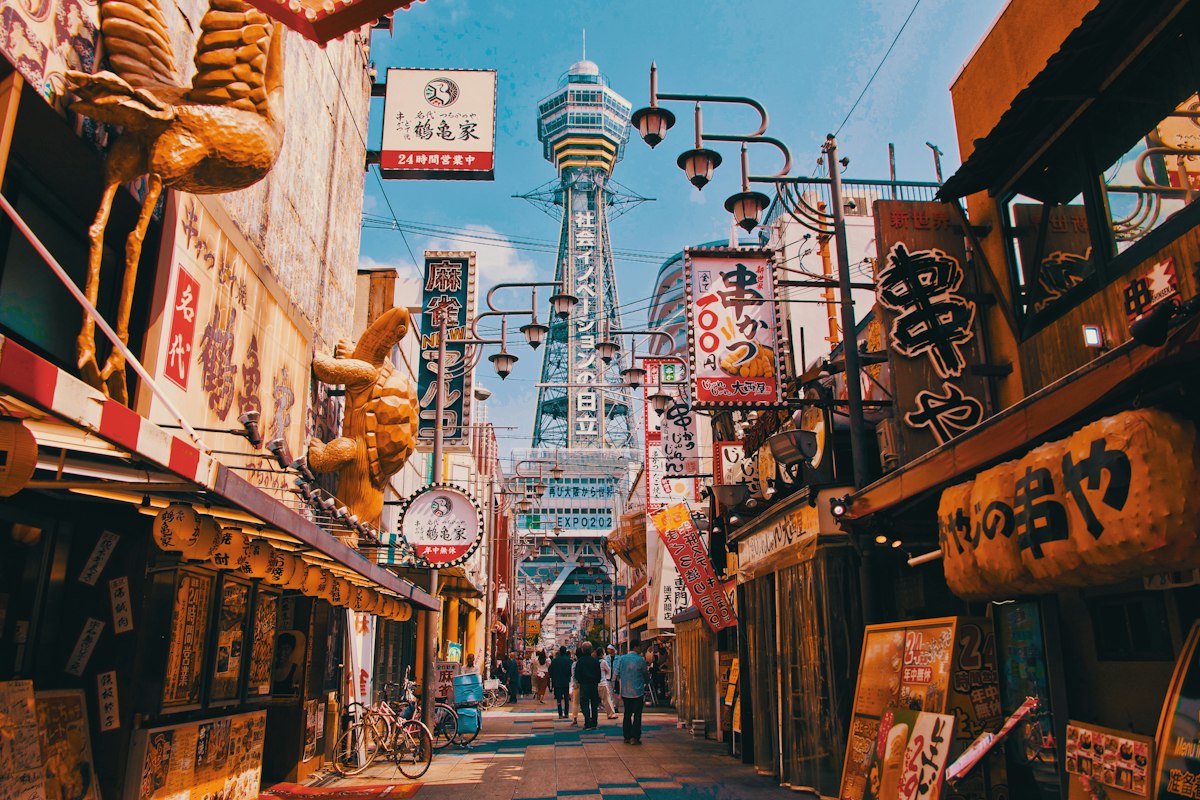
Shinsekai & Tennoji
✨ Vibe: Retro, working-class, authentic
Best for: Kusatsu (Kushikatsu) deep-fried skewers, local atmosphere, budget dining
Don't miss: Tsutenkaku Tower, Shinsekai kushikatsu restaurants, Tennoji Zoo and Park
Budget-friendly with great local character — avoid late at night as a first-time visitor
Book Neighborhood Walking Tours
Local-guided tours that reveal the soul of each district — Gion at dusk, Shinjuku night life, Dotonbori food walks.
Frequently Asked Questions
Where is the best neighborhood to stay in Tokyo?
Shinjuku is the most popular choice for first-time visitors — excellent transport connections, accommodation variety from budget to luxury, and close to major attractions. Asakusa suits travelers seeking old Tokyo atmosphere. Shibuya is ideal for fashion and nightlife. Ginza is best for luxury.
Where should I stay in Kyoto?
Gion/Higashiyama gives the most atmospheric experience but is expensive. Central Kyoto near Kyoto Station is convenient for day trips (Nara, Osaka) and has extensive accommodation options. Arashiyama is beautiful but requires more travel time to most sights. Fushimi is budget-friendly.
Is Shinjuku or Shibuya better to stay in Tokyo?
Shinjuku has more accommodation options, better JR rail connections (including to Narita/Haneda), and more diverse entertainment from izakaya to clubs. Shibuya has more boutique hotels, better access to Omotesando and Harajuku shopping, and the famous crossing. Both are excellent choices.
What is the most authentic neighborhood in Osaka?
Shinsekai is the most authentically "Osaka" neighborhood — old shitamachi atmosphere, cheap kushikatsu restaurants, local pachinko parlors. For a mix of authentic and accessible, Tenma or Fukushima districts near the Okawa river are popular with locals for restaurants and bars.
How do I choose between neighborhoods in Japanese cities?
Consider: (1) proximity to sites you want to see most, (2) ease of transport to Shinkansen/airport, (3) food and nightlife preferences, and (4) budget. Using Google Maps to measure walking times from candidate hotels to your top 3 attractions is the most reliable method.
Can I easily access Japan's attractions from any neighborhood?
Japan's public transport is so efficient that most urban neighborhoods have good access everywhere. The critical factor is which train line your hotel is near. Hotels on the JR Yamanote Line (Tokyo) or subway lines near main stations give the best flexibility.