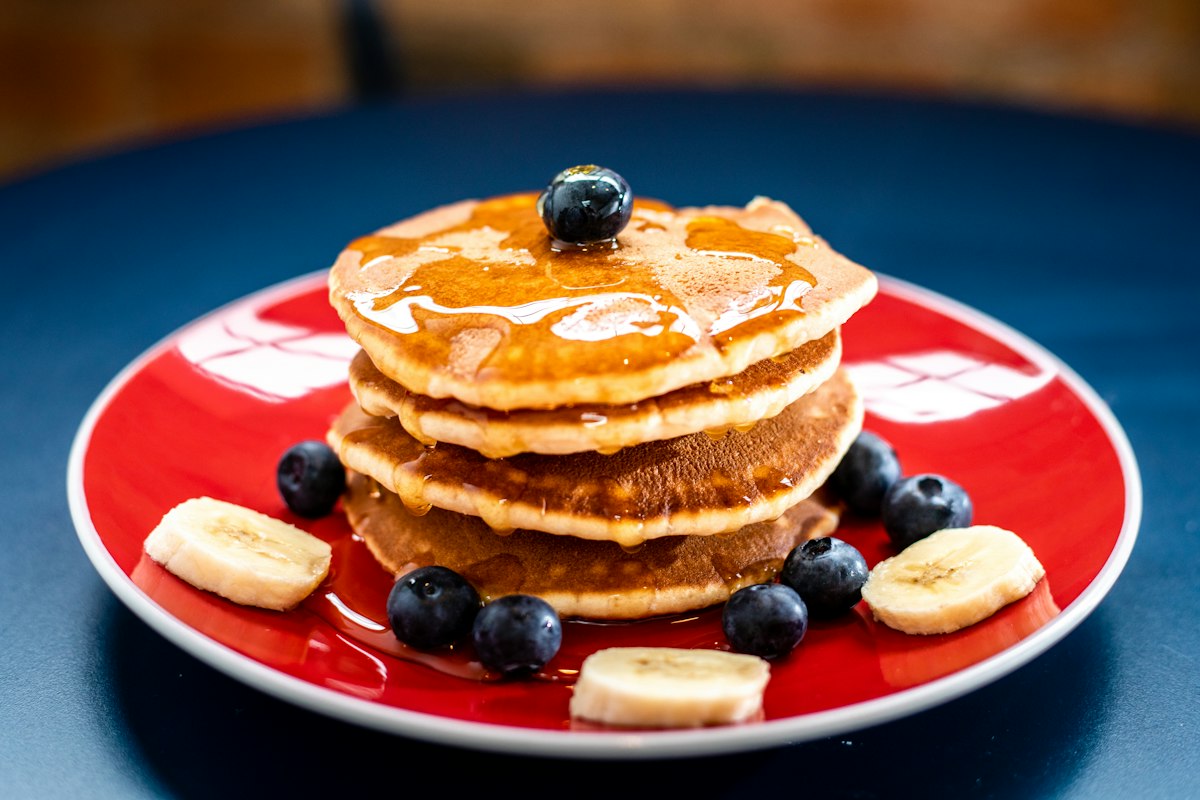
Japanese Fluffy Pancake Guide
The jiggly soufflé pancake that took Japan by storm
Stay in Tokyo for Japan's best café culture
Omotesando and Harajuku are the epicentres of Tokyo's fluffy pancake scene — stay nearby for easy morning access before queues form.
What Are Japanese Fluffy Pancakes?
Japanese fluffy pancakes — known as fuwafuwa pancakes (ふわふわパンケーキ) or soufflé pancakes — are a distinctly Japanese café food that bears little resemblance to the flat, dense pancake of Western tradition. Standing 6–8 centimetres tall and wobbling like a freshly set custard when placed on the plate, these pancakes became one of Japan's most viral food trends of the 2010s, spreading from Osaka's café scene to Tokyo, then to Instagram feeds worldwide.
The key distinction is the technique: standard pancake batter is prepared separately, and then stiffly whipped egg whites are carefully folded in to preserve the maximum volume of air bubbles. This batter is spooned into metal ring moulds on a lightly greased griddle and cooked over extremely low heat — often as low as 90–100°C — with a splash of water added to create steam and cook the thick stack through without burning the exterior.
The result is a pancake with a thin, lightly golden crust that gives way to an airy, cloud-like interior with a texture somewhere between sponge cake, soufflé, and mousse. It is significantly less sweet than its appearance suggests — the emphasis in Japanese café culture is overwhelmingly on texture, and the mild batter is intended to showcase the softness and jiggle rather than satisfy with sugar. Sweetness comes primarily from toppings: whipped cream, fresh seasonal fruit, maple syrup, and various sauces.
The visual drama of fluffy pancakes — the height, the gentle wobble, the cloud-like presentation — made them ideal for the Instagram era of food photography, and cafés specialising in them often have queues stretching around the block on weekends, with customers waiting 30–90 minutes for the privilege of a 20-minute cook time after ordering.
The Science of the Soufflé Pancake
The extraordinary height and texture of a Japanese fluffy pancake comes from the controlled collapse of a protein-stabilised foam. When egg whites are whipped to stiff peaks, air bubbles are captured in a network of denatured protein (primarily ovalbumin and conalbumin) that is strong enough to maintain structure during cooking, but still flexible enough to produce a tender result.
The critical technique is the folding method — the whipped egg white meringue must be incorporated into the yolk-flour batter with a slow, sweeping motion that preserves as many bubbles as possible. Over-mixing deflates the foam; under-mixing creates streaks of unmixed meringue that result in uneven texture. Professional pancake chefs in Japan typically train for months before producing a consistent product.
Cooking temperature is equally critical. High heat sets the outer crust too quickly, trapping steam that causes the pancake to collapse when cut. The correct approach is very low heat with a lid to trap steam, cooking for 5–7 minutes per side. Some cafés add a few drops of water to the griddle and immediately cover it, creating a steaming environment similar to a covered bain-marie. The ring moulds support the batter's height as it sets.
The physics of a fluffy pancake means it begins collapsing as soon as it leaves the heat, losing 10–15% of its height within 5 minutes of plating. This is why Japanese fluffy pancake cafés ask customers not to photograph their food for too long before eating — the sooner you eat, the closer to peak height and texture you experience. The gentle jiggle test (tilting the plate slightly to watch the pancake wobble) is the sign of a correctly made soufflé pancake.
The Best Fluffy Pancake Cafés in Tokyo
A Happy Pancake (幸せのパンケーキ) — Omotesando
The flagship location of Japan's most famous fluffy pancake chain, A Happy Pancake in Omotesando is considered the gold standard. Their classic pancake stack with fresh cream and seasonal fruit costs ¥1,400–¥1,800. Arrive 30 minutes before opening to secure a seat — weekend waits routinely exceed one hour. The minimalist white interior and careful plating make for exceptional food photography.
Flipper's (フリッパーズ) — Shinjuku & Shibuya
Flipper's calls their creation "miracle pancakes" and takes a more theatrical approach — the single pancake dome sits atop a simple base layer, often garnished with just one topping element. The simplicity emphasises the texture. Multiple Tokyo locations including Shinjuku NEWoMan and Shibuya Stream make this the most accessible premium fluffy pancake option. Prices from ¥900.
Gram — Harajuku & Shibuya
Gram's premium pancakes are only available at specific morning hours (typically 8am–11am) in limited daily quantities, and sell out without fail. The ultra-high meringue content produces an exceptionally tall, jiggly result. Arriving at 7:30am for the best chance of securing the morning batch is advised. For a more casual experience, their standard fluffy pancakes are available all day.
Cafe Kaila — Azabujuban
A Tokyo outpost of the Honolulu original, Café Kaila blends Hawaiian pancake culture with Japanese soufflé technique, producing particularly thick pancakes with extensive tropical topping options including lilikoi (passionfruit) sauce and macadamia cream. A favourite with the Roppongi Hills crowd and foreign visitors to Tokyo's Minato ward.
Osaka and Kyoto Fluffy Pancake Scene
Osaka is widely credited as the birthplace of Japan's fluffy pancake trend. The city's Dotonbori and Shinsaibashi café districts became the laboratories where the soufflé technique was refined in the late 2000s, before spreading nationally. Several pioneering Osaka cafés have become institutions of Japanese café culture.
Circus Osaka in the Namba area was among the first cafés to popularise tall soufflé pancakes in Japan and still draws queues every weekend. Their signature matcha and azuki pancake stack represents a distinctly Osaka-Kansai twist on the format. The Pancake Day in Shinsaibashi has become a destination for Korean and Taiwanese food tourists who fly to Osaka specifically to visit.
Kyoto's café scene approaches fluffy pancakes with more restraint and seasonal awareness. Several Kyoto cafés replace standard cream and berry toppings with traditional Japanese elements — seasonal wagashi pieces, hojicha (roasted green tea) cream, and kinako (roasted soy flour) butter. The Teramachi-dori shopping street has several fluffy pancake cafés positioned between antique shops and incense stores, creating a uniquely Kyoto café culture blend.
Regional variations have emerged throughout Kansai. Dote pancakes use a slightly denser batter with more yolk flavour. Some cafés incorporate local Kansai ingredients including Kyoto matcha, Nara persimmon compote, and Kobe strawberry cream. For food tourists, a Kansai fluffy pancake tour covering Osaka, Kyoto, and Kobe represents a serious itinerary over two to three days.
Tips for the Perfect Fluffy Pancake Experience
Arrive early. Popular fluffy pancake cafés in Tokyo and Osaka have queue management systems. Some issue numbered tickets before opening. Arriving 20–30 minutes before the café opens on weekdays and 45–60 minutes before on weekends gives you the best chance of minimal waiting. Some cafés are closed on Mondays or Tuesdays — check before visiting.
Order promptly and do not delay eating. Fluffy pancakes degrade quickly — the soufflé structure begins collapsing within minutes of plating. Photograph quickly and eat immediately. Cafés in Japan typically provide brief verbal warnings about this. The experience of eating a fresh, fully puffed fluffy pancake versus a partially deflated one 10 minutes later is dramatically different.
Choose toppings thoughtfully. Heavy toppings accelerate collapse. If you want the maximum height-to-eating window, order the classic version with light whipped cream and fresh berries rather than heavy sauces. Pouring maple syrup over the stack immediately also causes faster deflation — consider pouring gradually as you eat.
Consider weekday mornings. Fluffy pancake cafés are dramatically quieter on weekday mornings. Many cafés open at 8am for brunch service, and arriving at opening on a Tuesday or Wednesday means you may walk straight in without any wait. This also means fresher ingredient prep at the start of service, typically producing the best results of the day.
Frequently Asked Questions
What are Japanese fluffy pancakes?▾
Japanese fluffy pancakes (ふわふわパンケーキ) are soufflé-style pancakes made by folding whipped egg whites into batter and cooking in ring moulds over very low heat. The result is a 6–8 cm tall stack that jiggles like custard, with an airy, mousse-like interior quite unlike a flat Western pancake.
How long does it take to get fluffy pancakes at a Japanese café?▾
Most fluffy pancake cafés require 20–30 minutes after ordering as each pancake is cooked to order. Popular spots like A Happy Pancake and Gram also have 30–90 minute queues before seating on weekends. Arriving at opening on a weekday is the best strategy.
Where are the best fluffy pancakes in Tokyo?▾
A Happy Pancake in Omotesando is the gold standard. Flipper's in Shinjuku offers more accessible 'miracle pancakes'. Gram in Harajuku has a sought-after limited morning batch. All require patience — arrive before opening or expect a long wait.
Are Japanese fluffy pancakes sweet?▾
The batter is only mildly sweet — the focus is on texture. Sweetness comes from toppings: whipped cream, fresh berries, maple syrup, and various sauces. Savoury versions topped with bacon, cheese, and poached egg are also available at some cafés.
Book Your Tokyo Stay
Find hotels in Omotesando, Harajuku, or Shibuya — the best base for Tokyo's fluffy pancake café scene and morning brunch culture.