Japan Tonkotsu Ramen Guide 2025
Tonkotsu ramen — Fukuoka's gift to the world — is the most internationally beloved Japanese ramen style. Its opaque, milky pork bone broth (simmered 8–18 hours), ultra-thin Hakata noodles, and tableside customization ritual make it unlike any other bowl of ramen. This guide covers everything from Hakata's original shops to the kaedama system.
Find Hotels in Fukuoka — Hakata's Ramen Capital
Stay in Hakata to experience tonkotsu ramen at its source — from landmark shops to late-night yatai street stalls by the river.
What Is Tonkotsu Ramen? The Rich Pork Bone Broth
Tonkotsu ramen (豚骨ラーメン) is defined by its opaque, milky white broth made from pork bones simmered at high heat for 8–18+ hours. The collagen from the bones emulsifies into the broth, creating a creamy, intensely savory texture unlike any other ramen style. Born in Kurume, Fukuoka in 1937 and perfected in Hakata (Fukuoka's commercial district), tonkotsu is now Japan's most internationally recognized ramen style.
Tonkotsu at a Glance
- • Broth: Pork bones boiled 8–18+ hours at high heat — opaque, milky white, rich
- • Noodles: Very thin, straight, firm (low-moisture, high-kansui) — Hakata style
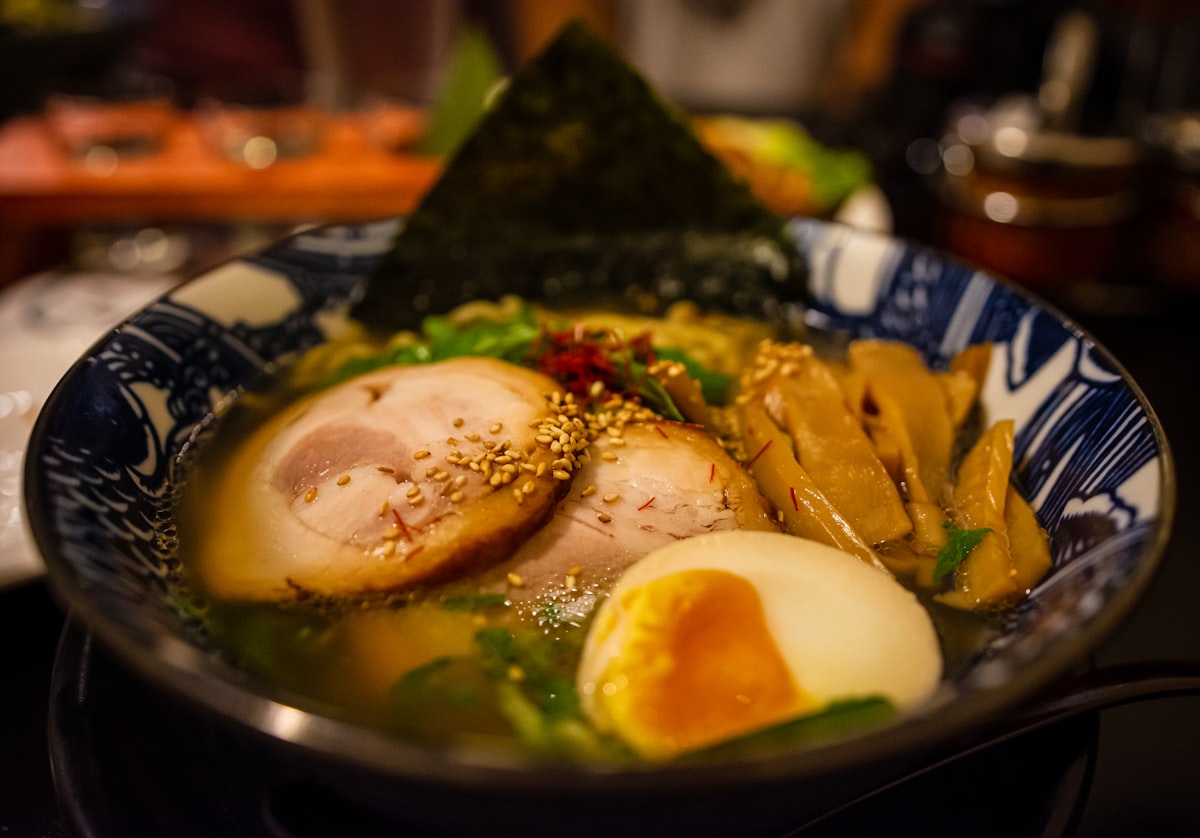
- • Toppings: Chashu pork, menma bamboo shoots, green onions, nori, soft-boiled egg
- • Kaedama system: Unique to Hakata-style — order extra noodles (kaedama) for ¥100–¥200 to add to remaining broth
- • Price range: ¥700–¥1,500 for a bowl
- • Home base: Fukuoka (Hakata), Kyushu
Hakata vs. Other Tonkotsu Styles
Hakata Ramen (Fukuoka)
The original and purest form — white, creamy broth, ultra-thin straight noodles, minimal toppings (green onion, chashu, pickled ginger on the table). The kaedama (extra noodle) system is unique to Hakata style. Eaten standing at counter or at no-frills ramen shops. Noodle firmness customizable: kata (firm), futsu (normal), yawaraka (soft).
Kurume Ramen (Fukuoka)
Even older than Hakata style (1937) and more intensely concentrated — darker, darker-brown broth from decades of "soen" (adding new broth to old without fully refreshing). The "mother pot" concept gives Kurume ramen an almost fermented depth.
Tokyo Tonkotsu (Hybrid)
Many Tokyo ramen shops blend tonkotsu with shoyu (soy sauce) or chicken broth for a less intense but more balanced bowl — called tonkotsu-shoyu. Thicker noodles than Hakata. More toppings. Different flavor profile.
Ippudo / Ichiran (National Chains)
Both originated in Fukuoka. Ippudo serves a refined, slightly lighter tonkotsu; Ichiran is famous for its solo dining booths and customizable spice/richness levels. Both have branches in Tokyo, Osaka, Kyoto, and internationally.
How to Order Tonkotsu Ramen in Japan
Customization Options (Hakata Style)
- • Koshi (コシ / firmness): Kata-kata (extra firm) → kata (firm) → futsu (normal) → yawaraka (soft) → totoro (very soft)
- • Aji no kosa (味の濃さ / flavor intensity): Kame (light) → futsu (normal) → kou (rich) → barikou (very rich)
- • Abura (脂 / fat level): Nashi (no fat) → sukuname (less) → futsu (normal) → oi (extra fat)
- • Negi (ネギ / green onion): Many shops ask inside (shiro negi) or outside (ao negi) preference
The Kaedama System
When your noodles are almost finished but broth remains, call "kaedama!" — additional noodles (¥100–¥200) are cooked fresh and brought immediately. This is unique to Hakata tonkotsu and is considered a normal part of the meal, not a special request.
Table Condiments
Authentic Hakata tonkotsu shops provide: karashi takana (spicy pickled mustard greens), benishoga (pickled red ginger), sesame seeds, and garlic crusher — add these tableside to adjust flavor as you eat. Don't add everything at once — add in stages.
Best Tonkotsu Ramen Shops in Japan
Shin-Shin (Fukuoka, Tenjin)
Consistently voted Fukuoka's best ramen — cleaner, more refined tonkotsu with excellent noodle texture. Long queue but moves quickly. Open until midnight.
Nagahama Ippudo (Fukuoka, original)
The original Ippudo location in Hakata — more authentic than Tokyo branches. The Shiromaru bowl is the classic. Be prepared for queues on weekends.
Ichiran Ramen (multiple locations)
Famous for individual dining booths (flavor concentration booths) where you customize via order sheet. Beginner-friendly — no interaction with staff needed, all English available. Find at Shinjuku, Shibuya, Dotonbori, and Hakata stations.
Yatai Street Stalls (Fukuoka)
Fukuoka is famous for outdoor yatai food stalls operating on sidewalks at night — many serve tonkotsu ramen. The Nakasu area near the river has 10+ stalls open from approximately 6pm until midnight or later. A uniquely Fukuoka dining experience.
Frequently Asked Questions
What is tonkotsu ramen?▼
Where is tonkotsu ramen from in Japan?▼
What does tonkotsu ramen taste like?▼
What is kaedama in tonkotsu ramen?▼
What are the best tonkotsu ramen restaurants for tourists?▼
Stay in Fukuoka — Tonkotsu Ramen's Birthplace
Fukuoka is a compact, easy-to-explore city with world-class ramen, excellent seafood, and the famous yatai night stall culture along the Nakasu River.