Gunma Travel Guide
Kusatsu Onsen, Ikaho, Oze wetlands & mountain autumn leaves
✈ Plan Your Gunma Trip FreeGunma Prefecture, two hours from Tokyo in the heart of the Kanto mountains, is Japan's undisputed hot spring capital. Kusatsu Onsen — ranked Japan's #1 hot spring resort for over 20 consecutive years — draws visitors with its volcanic Yubatake field and the ancient yumomi stirring ceremony. The hillside Ikaho Onsen charms with its 365-step stone staircase and golden iron-rich waters. Beyond the baths, Gunma offers the pristine wilderness of Oze National Park, mirror-still Haruna-ko Lake, and spectacular autumn gorges.
Top Attractions in Gunma
Kusatsu Onsen — Japan's #1 Hot Spring Resort
Ranked Japan's #1 hot spring resort by an annual survey for 20+ consecutive years, Kusatsu is defined by the Yubatake (hot spring field) — a wooden lattice structure in the center of town where 32,000 liters of scalding water per minute cool in the open air before reaching the baths. The unique "yumomi" ceremony sees bathers shout in unison and stir the water with long wooden paddles to cool the otherwise unapproachable 50–60°C water — a tradition found nowhere else in Japan. The town's sulfurous steam and old-fashioned charm make it the gold standard of Japanese hot spring resorts.
💡 Netsu-no-Yu public bathhouse offers the yumomi demonstration; Sainokawara Rotenburo is the largest outdoor bath. Book 3+ months ahead for peak season (winter weekends). The illuminated Yubatake at night is magical — allow time for an evening stroll.
Ikaho Onsen — Stone-Step Hot Spring Town
A picturesque onsen resort built on steep hillside terraces above a 365-step stone staircase lined with ryokan, souvenir shops, and an open-air footbath. The golden sulfurous water (colored by iron) and white water (from sulfur) flow into separate baths, offering two distinct onsen experiences. A beloved destination for Tokyo families since the Meiji era, Ikaho has preserved much of its historic atmosphere — wooden machiya facades, sake breweries, and traditional confectionaries flank the famous steps.
💡 Take the Ikaho Ropeway to the ridge above town for panoramic views of Haruna-ko Lake and Mt. Akagi. Stay at a riverside ryokan for the evening firefly season (June–July). The stone steps are most atmospheric at dusk when the lanterns are lit.
Haruna-ko Lake & Mt. Haruna
A caldera lake formed by a volcanic eruption, Haruna-ko is famous for its mirror-like reflections in autumn (October–November) and ice fishing in winter. Mt. Haruna (1,449m) last erupted in the 17th century, and the Haruna Shrine on its slopes is one of the most dramatically situated Shinto complexes in the Kanto region — nestled between towering cliff faces with a stunning tori gate framing the forested peaks. The lake's calm surface and encircling mountain walls create an otherworldly serenity year-round.
💡 The autumn foliage (October–November) reflecting on the lake surface is among the most photographed scenery in the Kanto region. Rowboat rentals are available at the lakeside. Haruna Shrine's inner sanctum, set between dramatic cliff walls, is a highlight not to be missed.
Oze National Park — Japan's Largest Highland Wetland
Japan's largest wetland plateau — over 2,000 hectares at 1,400m altitude — Oze is filled with marshland boardwalks, ponds, and dramatic peaks. In May and June, fields of Mizubasho (Asian skunk cabbage) bloom across the wetlands in one of Japan's most celebrated wildflower displays, drawing hikers from across the country. In September, the crowds thin and golden autumn colors arrive. Access is via the Tokura or Ohshimizu trailheads, with well-maintained wooden boardwalks threading through the marsh to mountain-hut rest stops.
💡 The May golden week Mizubasho bloom draws enormous crowds — book accommodation months ahead. September offers fewer crowds and beautiful autumn colors. Start early (before 8:00) to secure car parking at the trailheads, as they fill by mid-morning on weekends.
Maebashi & Gunma Museum of Art (GOMA)
Gunma's prefectural capital houses a strikingly modern museum — the Gunma Museum of Art, Maebashi (GOMA) — designed by Riken Yamamoto and surrounded by sculpture gardens. The city is ringed by the Akagi Highlands, offering panoramic views of Nikko, Mt. Fuji, and the Japanese Alps on clear winter days. Maebashi is also the birthplace of poet Saki Akita, and the city has a growing restaurant and craft beer scene. The annual Maebashi Marathon draws elite runners from across Japan.
💡 GOMA is closed on Mondays and the day after national holidays. Combine a visit with lunch in Maebashi's central shopping district. The rooftop sculpture garden offers excellent views of Mt. Akagi on clear days.
Shimonita & Nishi-Agatsuma Autumn Valleys
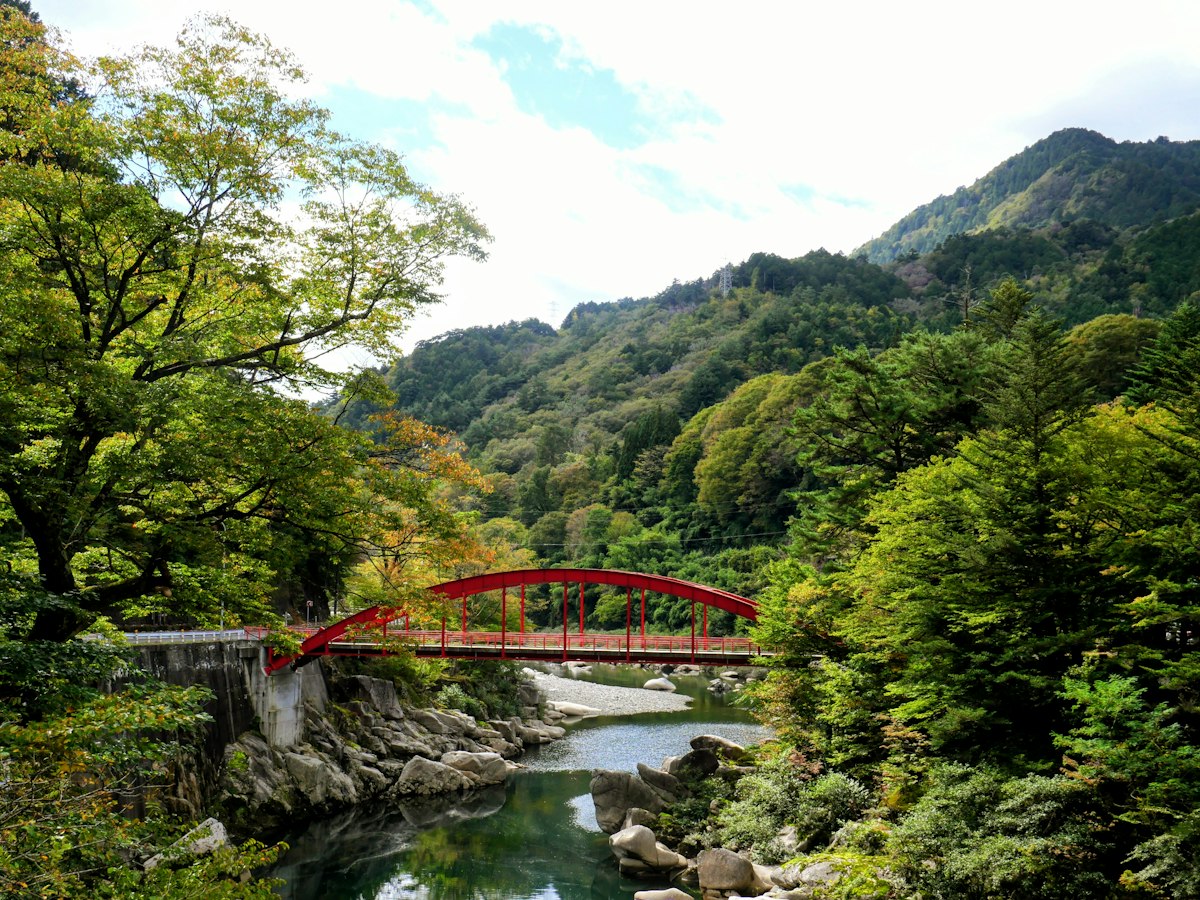
The Kannabi Gorge near Shimonita produces one of the most dramatic autumn foliage displays in the region, with narrow canyon walls turning crimson in mid-November. The Nishi-Agatsuma scenic byway along the Agatsuma River connects Karuizawa (Nagano) and Kusatsu — threading through forest and onsen villages in a journey that captures western Gunma's wild mountain character. The Agatsuma Gorge railway line itself offers spectacular views from glass-panelled observation cars.
💡 Combine with a visit to the Karuizawa–Gunma border for a cross-prefecture mountain and onsen day. The Agatsuma railway runs limited observation car services in autumn — book these specifically if available. Mid-November is peak foliage timing for this area.
What to Eat in Gunma
Yaki Manju (焼きまんじゅう)
Gunma's undisputed #1 street food: large steamed wheat buns brushed with a sweet-savory miso paste and grilled on skewers over charcoal until caramelized and fragrant. Sold at festivals, markets, and roadside stalls throughout the prefecture. The smoky miso crust and soft doughy interior make these impossible to eat just one.
📍 Festival stalls; Maebashi and Takasaki markets; Ikaho Onsen souvenir shops
Himokawa Udon (ひもかわうどん)
A Kiryu specialty — flat ribbon udon noodles so wide (up to 10cm) they look more like lasagne sheets than noodles. Served in a rich dashi broth or cold with dipping sauce, Himokawa udon has a silky, chewy texture unlike any other udon style in Japan. A must-eat for noodle lovers visiting eastern Gunma.
📍 Fujioka-ya, Kiryu; Himokawa Udon specialty restaurants in Kiryu City
Gunma Wagyu (群馬和牛)
Local beef from Japanese Black cattle raised in the clean mountain air of the Agatsuma region. Gunma wagyu offers the exceptional marbling of premium Japanese beef at more accessible prices than Kobe or Matsusaka, and is served as yakiniku, sukiyaki, and teppanyaki at restaurants throughout the prefecture.
📍 Yakiniku restaurants in Maebashi and Takasaki; Kusatsu Onsen hotel restaurants
Maebashi Yakisoba (前橋焼きそば)
While yakisoba is a national dish, Maebashi has developed a particular local pride in its version — thick, springy noodles stir-fried with cabbage, pork, and a house-blend Worcestershire-style sauce. Served piled high at the city's many specialty shops and festival stalls.
📍 Yakisoba specialty restaurants in central Maebashi; street stalls at local festivals
Kusatsu Onsen Manjū (草津温泉まんじゅう)
Soft, delicately steamed buns sold at every shop near the Yubatake in Kusatsu, stuffed with sweet red bean paste (or other fillings) and fragrant with the faint mineral scent of onsen steam. The perfect hot snack to eat while walking between baths — available in traditional, matcha, and seasonal flavors.
📍 Shops along Yubatake street, Kusatsu Onsen
Konnyaku (こんにゃく)
Gunma produces approximately 90% of Japan's konjac (konnyaku), and the local product is far superior to what most visitors encounter elsewhere. Enjoy it stewed in dashi, grilled on skewers as dengaku (with miso), or served as sashimi-style slices in cold water — a surprisingly refreshing and uniquely Gunma dining experience.
📍 Izakaya and traditional restaurants throughout Gunma; Shimonita specialty shops
Where to Stay in Gunma
Kusatsu Onsen is the prime onsen accommodation area — book at least 3 months ahead for winter weekends. Ikaho Onsen offers a quieter, more family-friendly ryokan experience on the famous stone-step hillside.
Hotels in Kusatsu Onsen
Prime onsen area — book 3 months ahead for peak season
Hotels in Ikaho Onsen
Stone-step hot spring town — family ryokan & Haruna-ko access
Tours & Activities in Gunma
Book Kusatsu Onsen yumomi experiences, Oze National Park guided hikes, Ikaho Onsen ryokan packages, and scenic mountain drives through western Gunma.
Getting to Gunma
Gunma Travel FAQ
Why is Kusatsu Onsen ranked Japan's best hot spring?▾
Kusatsu has been ranked #1 in the Onsen Grand Prix survey for over 20 consecutive years, thanks to a combination of factors: the highest flow rate of any hot spring in Japan (32,000 liters per minute from the Yubatake alone), an exceptionally high free sulfur content that gives the water strong therapeutic properties, and the unique "yumomi" water-cooling ceremony found nowhere else. The town also offers an extraordinary variety of baths — from the massive Sainokawara outdoor rotenburo to intimate inn baths and the historic Netsu-no-Yu.
What is the difference between Kusatsu Onsen and Ikaho Onsen?▾
Kusatsu is the wilder, more intensely sulfurous experience — volcanic, dramatic, and best in winter with snow. Ikaho is milder, more family-friendly, and charming with its famous 365-step stone staircase lined with ryokan and shops. Kusatsu draws those seeking powerful therapeutic bathing; Ikaho appeals to couples and families wanting a picturesque, atmospheric onsen town. Both are day-trippable from Tokyo but warrant at least one overnight stay.
When is the best time to visit Gunma?▾
Winter (December–February) for snow-covered Kusatsu Onsen — arguably the most photogenic onsen in Japan in winter conditions. May–June for Oze National Park's Mizubasho wildflower bloom (one of Japan's most celebrated). October–November for autumn foliage at Haruna-ko Lake, Ikaho, and the Shimonita gorges. Spring cherry blossoms are also beautiful in Maebashi and Takasaki (late March–April).
How far is Kusatsu Onsen from Tokyo?▾
Approximately 2.5 hours by the Limited Express Kusatsu train from Ueno Station to Naganohara-Kusatsuguchi, followed by a 30-minute local bus to Kusatsu Onsen town center. By highway bus from Shinjuku, the journey is around 3 hours. Driving takes about 2.5–3 hours via the Kanetsu Expressway depending on traffic.
Can I do a day trip to Kusatsu from Tokyo?▾
Yes — a day trip is possible, but an overnight stay is strongly recommended. The round trip alone takes 5–6 hours, leaving limited time to enjoy the baths, stroll the Yubatake, and experience the yumomi ceremony. Staying at a ryokan also gives you access to in-house baths for early morning soaks (when day visitors are absent) and the atmospheric evening illumination of the Yubatake.
What is Oze National Park known for?▾
Oze is Japan's largest highland wetland plateau — over 2,000 hectares at around 1,400m altitude — and is internationally recognized for its pristine marsh ecosystem. It is most famous for the spectacular Mizubasho (Asian skunk cabbage) blooms in May and June, when white flowers carpet the marshes. Wooden boardwalks allow visitors to walk through the heart of the wetland, and the surrounding peaks offer strenuous but rewarding summit hikes. Autumn (September–October) brings vivid foliage and fewer crowds.